David Thompson Broadus
1852-1924
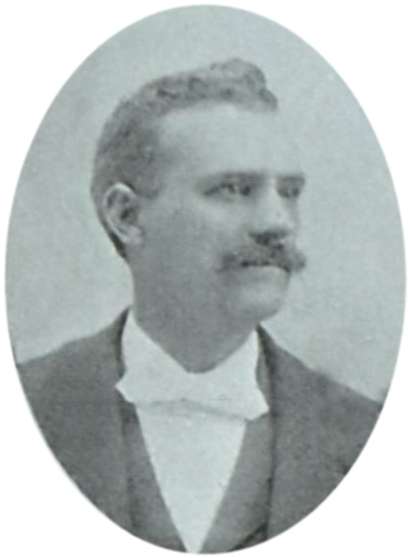

David T. Broadus: Preacher, Writer, Editor, and Builder of Churches
D. T. Broadus belonged to a generation of gospel preachers whose influence was measured not merely by the sermons they delivered, but by the congregations they strengthened, the lives they quietly shaped, and the work they left in the hands of others. For more than forty years, he preached across a broad stretch of the American frontier and plains. He was also a remarkably productive religious writer, an editor of several periodicals, a mentor to younger ministers, and a trusted shepherd of the churches he served. When he died in 1924, The Christian Worker, the paper he had founded and edited, devoted an entire eight-page issue to his memory. The tributes came from men who had preached beside him, stayed in his home, read his editorials, and watched his patient work in local congregations. Together, their recollections reveal a man of learning without pretension, conviction without harshness, and extraordinary industry without a desire for recognition.
David Thompson Broadus was born near Lancaster in Garrard County, Kentucky, on December 2, 1852. He grew up on a farm in a Christian family and attended the public schools until he was eighteen. His youth was spent only thirty or thirty-five miles south of Lexington, in a region deeply marked by the religious debates and personalities of the Restoration Movement. Although the precise extent of that early influence cannot now be measured, the convictions associated with the movement—devotion to Scripture, the restoration of New Testament Christianity, and the independence of the local congregation—became the governing principles of his life.
At eighteen, Broadus became a Christian and soon began taking a public part in the work of his home congregation. That same year, he entered the teaching profession, serving in Kentucky’s public schools for approximately ten years. His education did not end with his common-school training. As a young man he pursued further courses of study and later completed Bible correspondence work associated with schools at Kimberlin Heights, Tennessee, and Christian University at Canton, Missouri, graduating with honors. Friends who knew him in later years remembered seeing his academic credentials and emphasized that his learning was not casual or scattered. His was an orderly and disciplined mind, trained through sustained study.
On January 18, 1877, Broadus married Dusky Murphy of Garrard County. Their marriage endured through the demands of ministry, repeated moves, and the sorrows and joys of raising a large family. Seven children—six sons and one daughter—were born to them: Clarence, Bernard, Otis, Emmett, Homer, Paul, and Amy. Emmett, Paul, and Amy died in childhood. The four surviving sons remained active in the church, with Otis later serving as an elder in Wichita and Homer as an elder at Canadian, Texas. Those who entered the Broadus home remembered it as a place of prayer, hospitality, affection, and serious Christian devotion. Dusky was consistently recognized as a faithful companion whose support made her husband’s extensive work more productive.
Broadus began preaching at approximately twenty-eight years of age. His first sustained work was with his home congregation at Old Scotts Fork, Kentucky, where he preached for four years. In December 1884, he and his family left Kentucky for Kansas, beginning an itinerant and local ministry that would take him through Kentucky, Missouri, Kansas, Oklahoma, Colorado, New Mexico, Texas, and what was then Indian Territory. His known fields of local labor included Scotts Fork, Kentucky; Clearwater, Caldwell, Conway Springs, and Belle Plaine, Kansas; Moriarty, New Mexico; Canadian, Texas; and finally Wichita, Kansas.
His years in Kansas were especially productive. He helped establish congregations, conducted lengthy gospel meetings, and worked repeatedly with churches over extended periods. He labored at Belle Plaine at different times over approximately twelve years. In the early twentieth century he spent about three years doing mission work in Moriarty, New Mexico, a difficult and sparsely developed field. In November 1909, he began working with the small congregation at Canadian, Texas. Three years later, in 1912, he moved to Wichita, where he would complete the most enduring work of his life.
Broadus kept a ledger of his preaching activity. According to a later account based upon that record, he conducted meetings in more than 124 places, preached at least 7,039 sermons, and recorded 1,218 people who responded to his evangelistic efforts. Such figures cannot convey the full character of his ministry, but they illustrate its remarkable extent. Gospel meetings in his era often continued for several weeks, and Broadus was frequently invited to return to the same communities. His endurance was therefore as notable as his reach.
As a preacher, he was remembered for clarity, preparation, and sound judgment. B. F. Rhodes, who knew him intimately for some thirty years, described his preaching as logical, understandable, carefully arranged, and faithful to Scripture. Broadus preferred plain truth to rhetorical display. Yet plainness did not mean dullness. Others praised his diction, command of English, familiarity with literature, and ability to meet almost any occasion with an appropriate, well-prepared message. One admirer summarized the confidence he inspired with the observation, “Bro. Broadus will acquit himself well. He always gets ready for the occasion whatever it may be.”
His ministry extended far beyond the pulpit. Broadus visited the sick, encouraged struggling Christians, called upon families, performed marriages, and conducted funerals throughout south-central Kansas. His presence was particularly valued in times of grief. Friends believed that he had married more couples and conducted more funerals than any other gospel preacher in that part of the country. His personal work gave him a place in the affections of the people that public preaching alone could not have secured.
Broadus was equally influential through the printed word. He contributed for many years to the Gospel Advocate, the Christian Leader, and other religious journals. He served as associate editor of the Christian Leader and contributed to F. L. Rowe’s volume Beauties and Duties of Life. For a period he edited the Christian Companion. When that publication was moved away from Wichita, Broadus founded The Christian Worker and served as its first editor.
Under the cooperative labor of Broadus and his close associate Homer E. Moore, The Christian Worker developed from a monthly publication into a weekly and grew substantially in circulation. Broadus reportedly supplied approximately four thousand manuscript pages to the paper, missing only one issue before his final illness silenced his pen. His editorials were described as clear, constructive, conservative, and carefully reasoned. He did not write to provoke needless controversy or cultivate a personal following. His purpose was to teach Scripture, encourage faithful living, preserve peace among congregations, and strengthen the work of the church. Moore remembered their regular editorial consultations and Broadus’s almost unfailing punctuality. Unless detained by a funeral or another urgent duty—and in such cases he sent notice—Broadus arrived at the office on his appointed day and at the expected minute.
The crowning chapter of his ministry unfolded in Wichita. When Broadus arrived in 1912, he began serving the congregation at Mathewson Avenue as both minister and elder. Within a few months he was also conducting midweek services in private homes on the city’s west side. The work developed sufficiently for the Maple Street building to be built in 1914. Thereafter, Broadus divided his preaching between the Mathewson Avenue congregation and the growing West Side work.
Both congregations prospered. The Mathewson Avenue building was enlarged, while the West Side congregation sold its first property and erected a new brick chapel at Walnut and University. Broadus worked deliberately to maintain harmony and cooperation between the two congregations, and his associates credited his teaching, prayers, and personal influence with much of their unity. The new West Side building opened for worship only about two weeks before his death. His failing health prevented him from seeing it, but his funeral was held there. It stood, along with the strengthened East Side congregation, as a visible monument to his final years of labor.
Those final years were not years of retreat. Although he was past seventy, acquaintances remarked upon his vigor and believed that some of his finest preaching came near the end of his ministry. His last work, A. J. Rhodes wrote, was his best work—a powerful example to older ministers that age need not bring spiritual idleness.
The memorial issue of The Christian Worker is particularly valuable for the consistent portrait presented by so many independent witnesses. Broadus was repeatedly called methodical, punctual, modest, cultured, pure-minded, and tireless. He was conservative without being combative, firm without being unkind, and serious without being cold. He enjoyed wholesome humor but resisted anything that diminished the dignity of the pulpit or the church. He was loyal to friends while remaining able to recognize their faults. He did not chase novelty, cultivate “hobbies,” or resort to spectacular methods to gain attention.
Younger preachers especially remembered his kindness. He corrected their sermons, pointed out weak arguments, and offered fatherly criticism in a manner they could receive without resentment. Rue Porter believed himself a better teacher and Christian because of Broadus’s candid guidance. C. L. Wilkerson remembered him as a friend to every worthy “boy preacher,” reserved and guarded in manner but neither distant nor unsympathetic. His corrections were governed by affection and a desire to make another man’s work stronger.
Broadus’s character was tested during a prolonged and painful final illness. For approximately seven months he suffered from a severe disease, believed by later writers to have been cancer. The Wichita congregations continued his support throughout his illness—a gesture praised in the memorial issue as a worthy example of churches caring for an aged and faithful minister.
David Thompson Broadus died in Wichita on Saturday, September 20, 1924, at the age of seventy-one years, nine months, and eighteen days. He was survived by his wife, Dusky; four sons, Clarence, Bernard, Otis, and Homer; thirteen grandchildren; two brothers, Cronley and Frank Broadus; and a sister, Tilda Ann Davis.
At Broadus’s request, Homer E. Moore delivered the funeral address. C. C. Houston read from 1 Thessalonians 4, A. J. Rhodes offered prayer, and Clayton Gall read the obituary. The West Side chapel seated approximately four hundred, but contemporary witnesses estimated that nearly twice that number came from across Kansas and Oklahoma to pay their respects. Broadus was buried in Wichita’s Old Mission Cemetery. Dusky followed him in death about a year later.
The breadth of the memorial issue published after his death demonstrates the affection in which Broadus was held, but its most compelling testimony lies in the agreement of its contributors. They did not chiefly remember a commanding personality, an eloquent platform performer, or an ambitious editor. They remembered a man who came prepared, arrived on time, kept his promises, opened his home, helped young preachers, comforted grieving families, wrote useful words, and remained in difficult fields long enough to make a lasting difference.
Broadus built no personal institution bearing his name. His monuments were the congregations he established and strengthened, the thousands of sermons and pages he prepared, the younger workers he encouraged, and the family whose service continued after him. As John T. Hinds observed, Broadus pursued “none of the spectacular methods” by which men seek notoriety. He simply continued, year after year, “at the work of doing good.”
That steady faithfulness explains why, a century after his death, David Thompson Broadus remains worthy of remembrance. His life joined scholarship with humility, conviction with gentleness, and public proclamation with private service. His voice and pen were finally stilled, but the words chosen for his memorial issue remain an apt conclusion: “Though dead, he still speaks.” His works followed him—and much of their influence remained behind.
-Scott Harp, 08.24.2026
Sources: Gospel Preachers of Yesteryear, Loyd L. Smith, pages 72-74; In Memoriam, Gussie Lambert, Shreveport, LA, c.1988, p.37,38; Christian Worker, October 30, 1924.
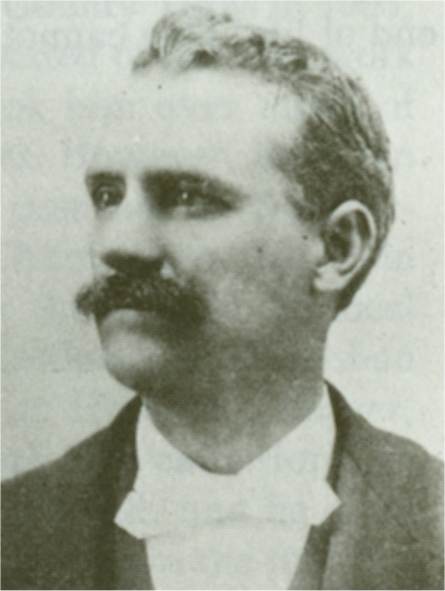
Directions To Grave
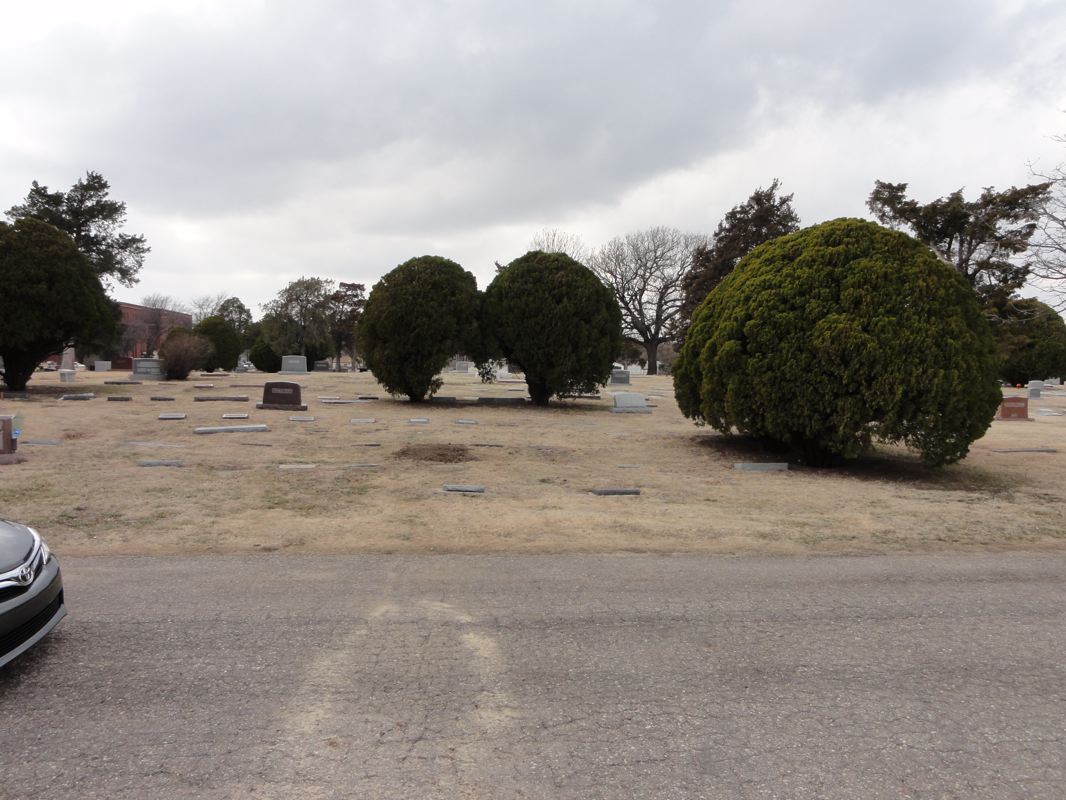
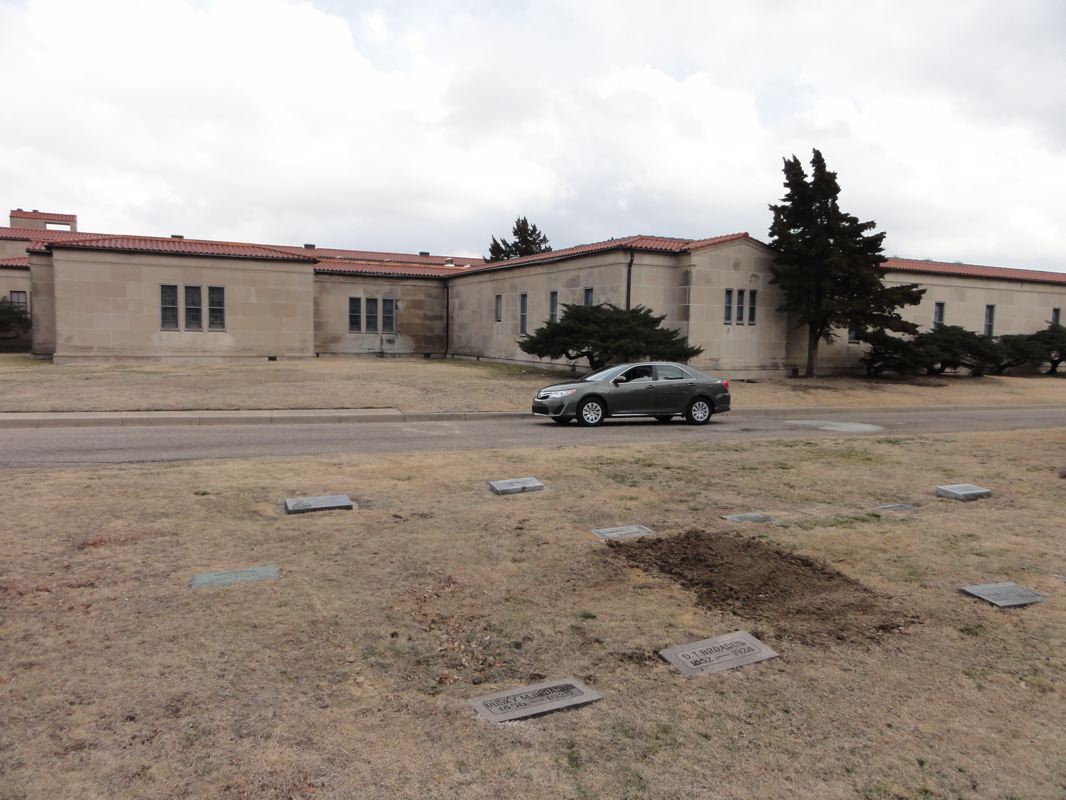
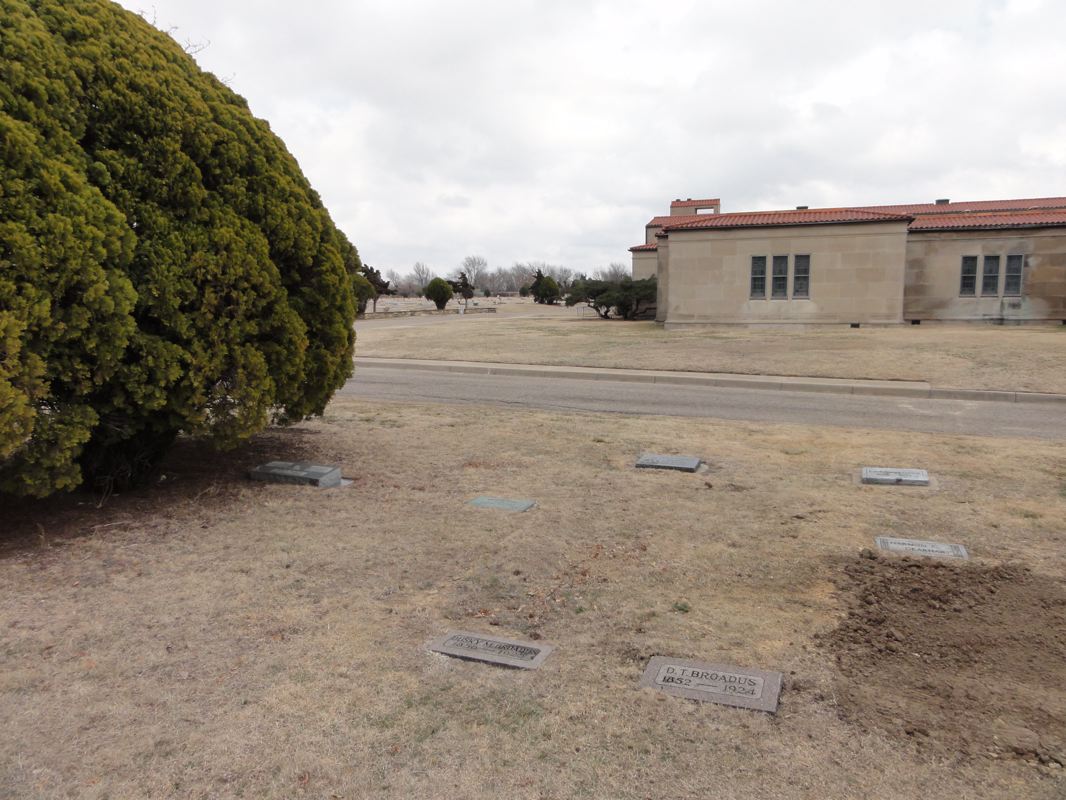
David Thompson Broadus is buried in Old Mission Cemetery In Wichita, Kansas. The cemetery is located at 3434 E. 21st Street, on the corner of Hillside St. N and E. 21st across from Wichita State University in Wichita. Turn north into the main entrance to the Old Mission Mortuary. At the north end of the mortuary take an immediate left turn (west). Proceed through the first intersection, after which the old mausoleum will be on your right. Proceed to the next intersection and bear right (north), keeping the mausoleum on your right. Stop when you are even with the north end of the mausoleum; section "F" of the Old Mission cemetery will be on your left (west). The grave is in the third row west of the road, and is just south of a pair of very large arborvitae ("cedar") bushes. It is in lot 13, space 7. It is engraved "D. T. Broadus." The GPS location below is the actual location of the graves.
GPS Location
37°43'29.2"N 97°17'50.5"W
or D.d. 37.724781, -97.297365
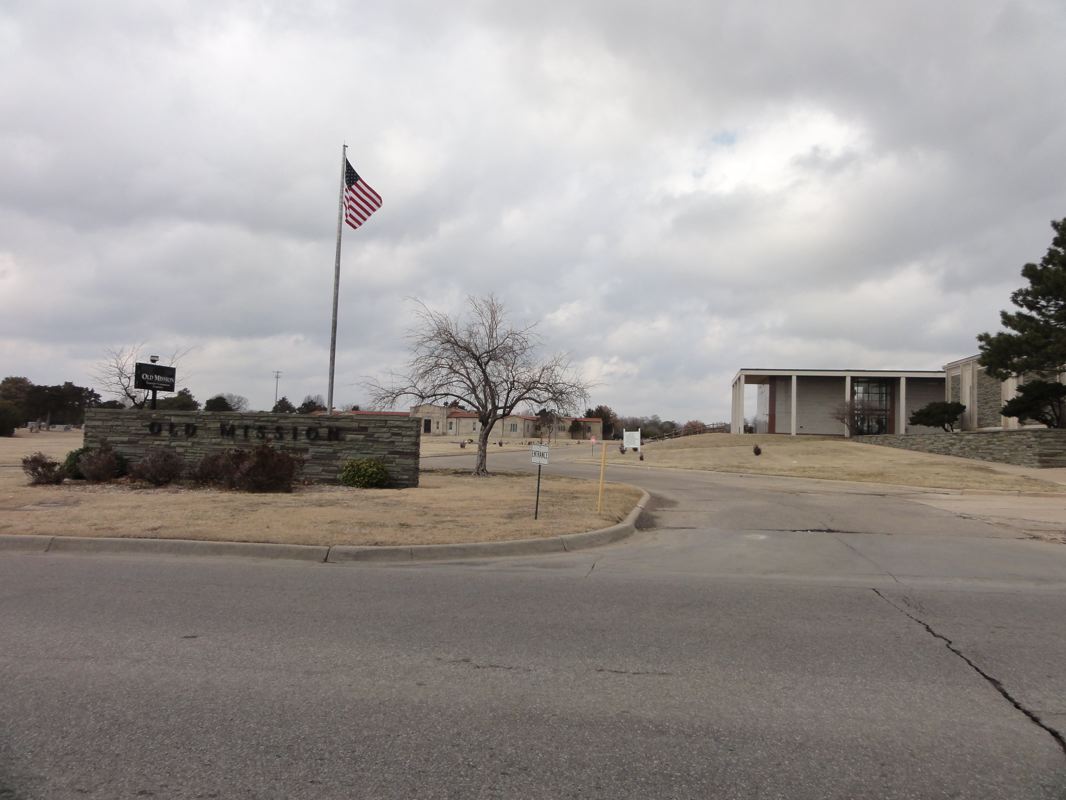
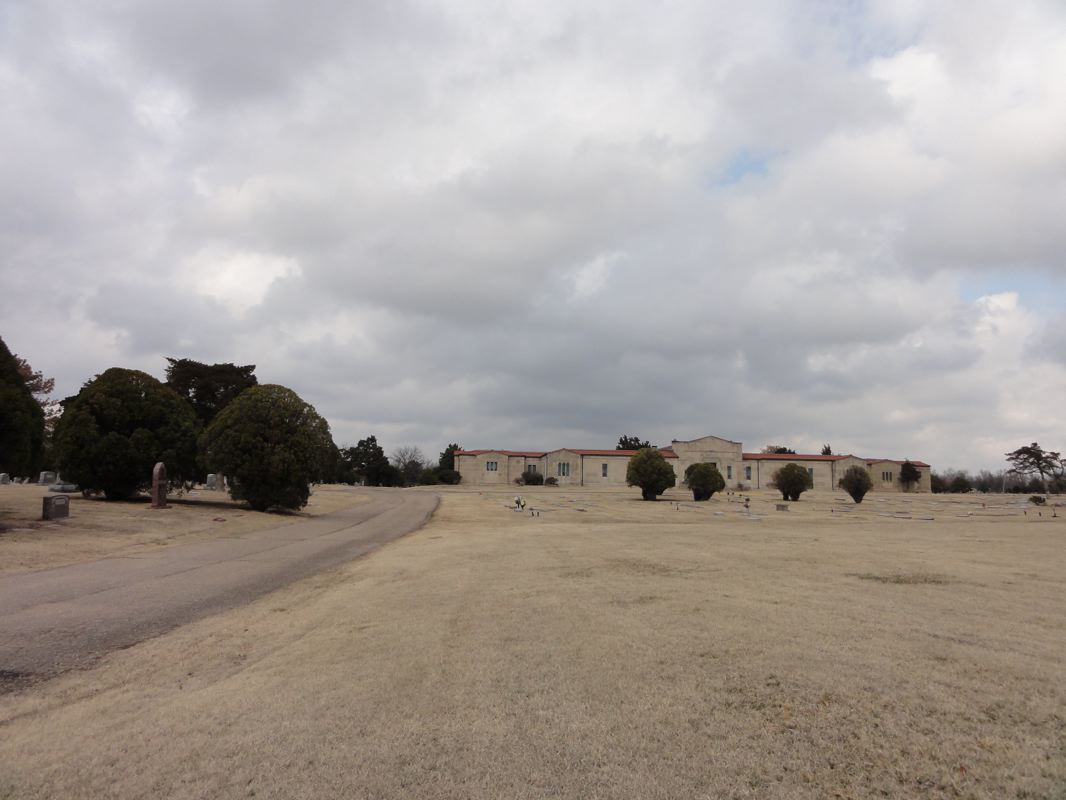
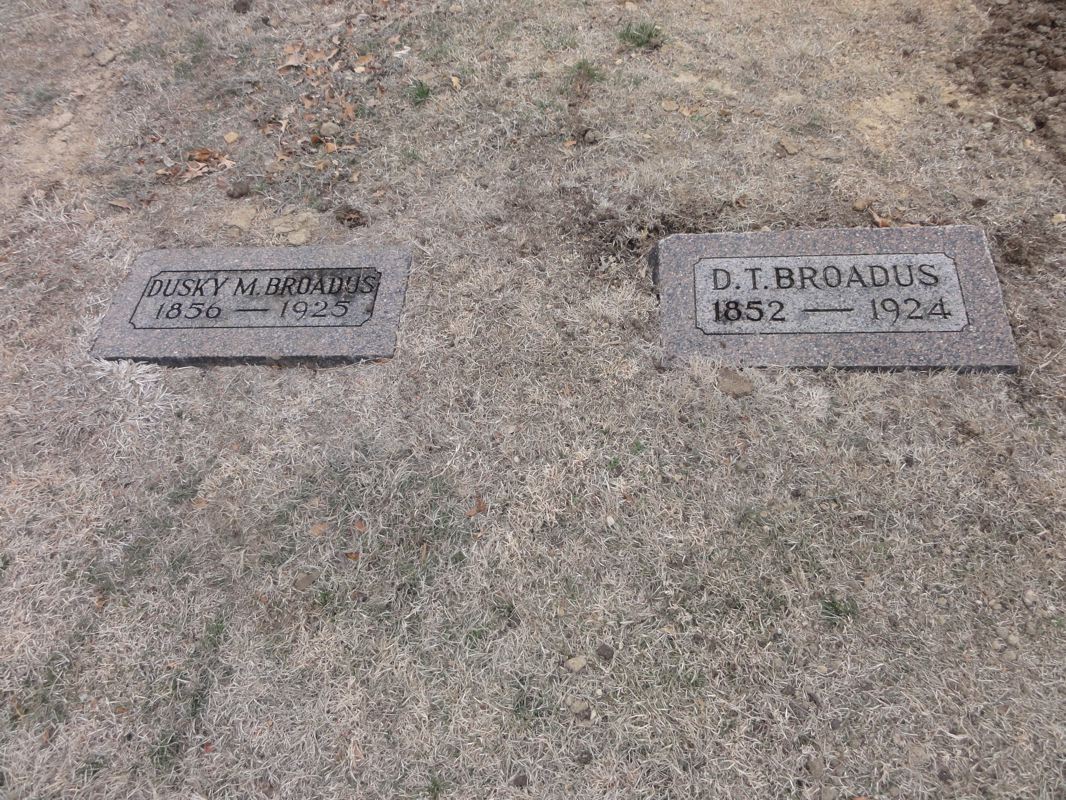
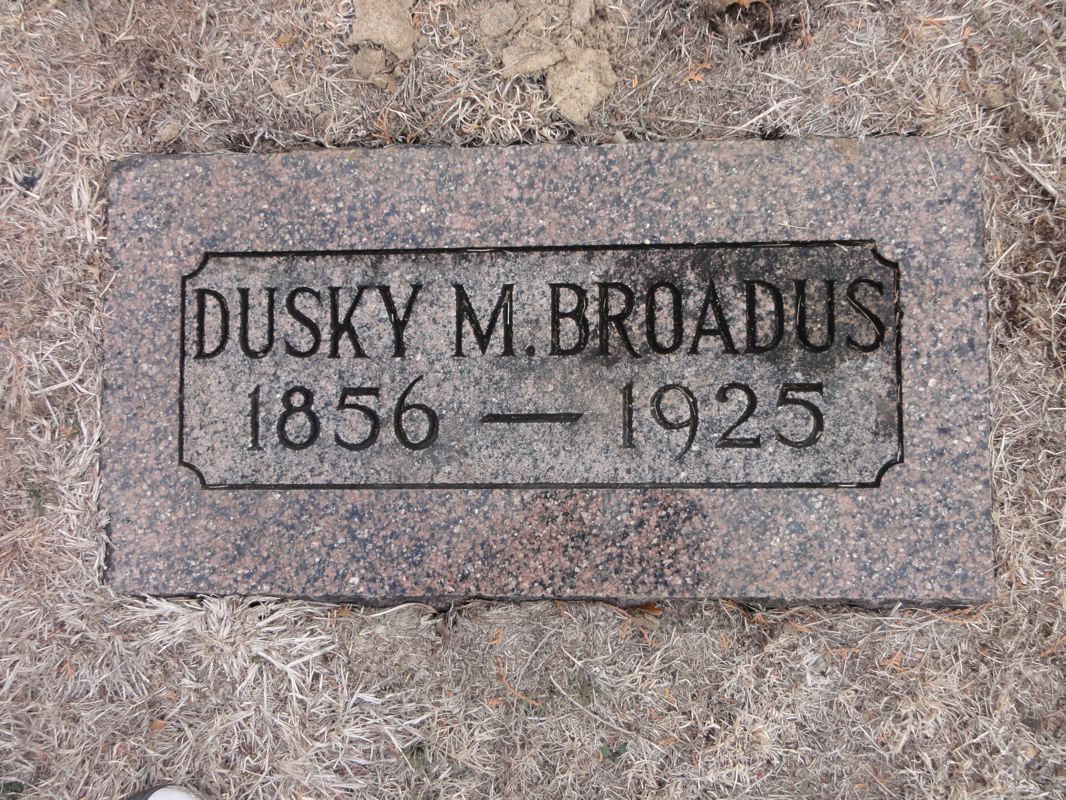
Dusky M. Broadus
1856-1925
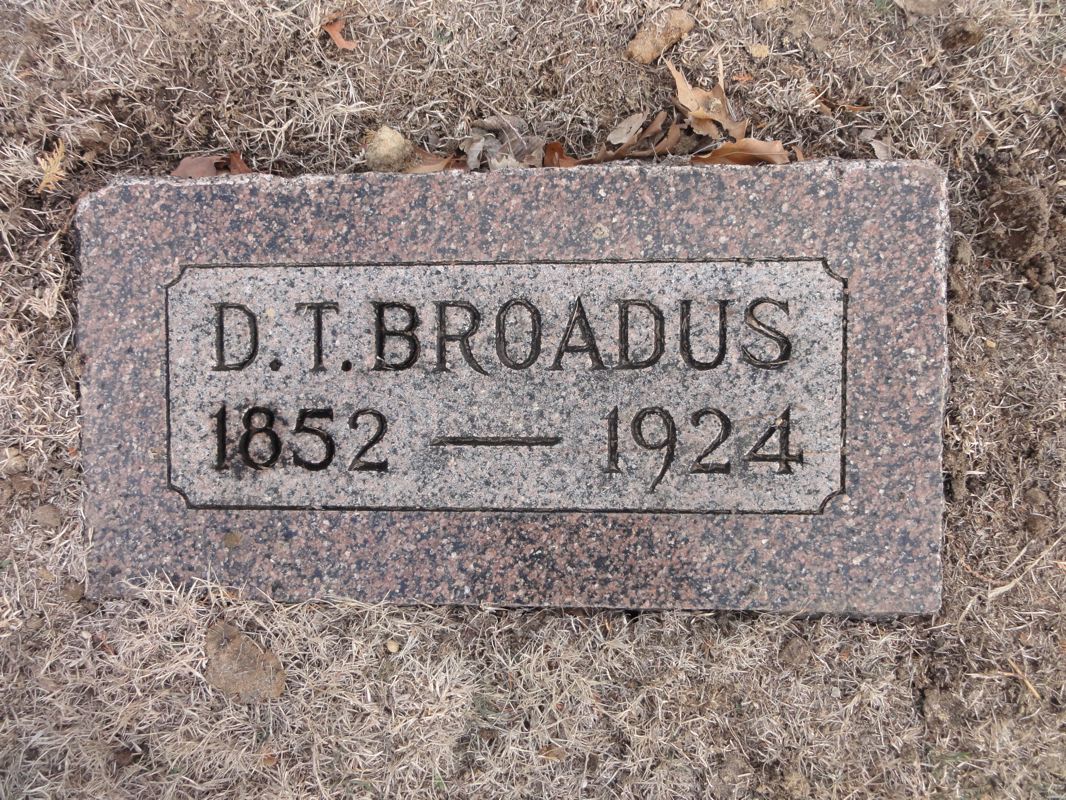
D. T. Broadus
1852 - 1924
Photos Taken February 20, 2016
Webpage produced 08.25.2026
Courtesy Of Scott Harp
www.TheRestorationMovement.com
Special Recognition: -Thanks extended to Joe Slater, preacher for the church Of Christ In Augusta, Kansas, who in 2003 drove to Wichita, Kansas and located the graves of D. T and Dusky Broadus. Then in 2016, I had the opportunity to visit the grave and took the photos you see above.
Memorial Issue: The Christian Worker, October 30, 1924 - PDF