Oscar Lucas Hays
1879-1963
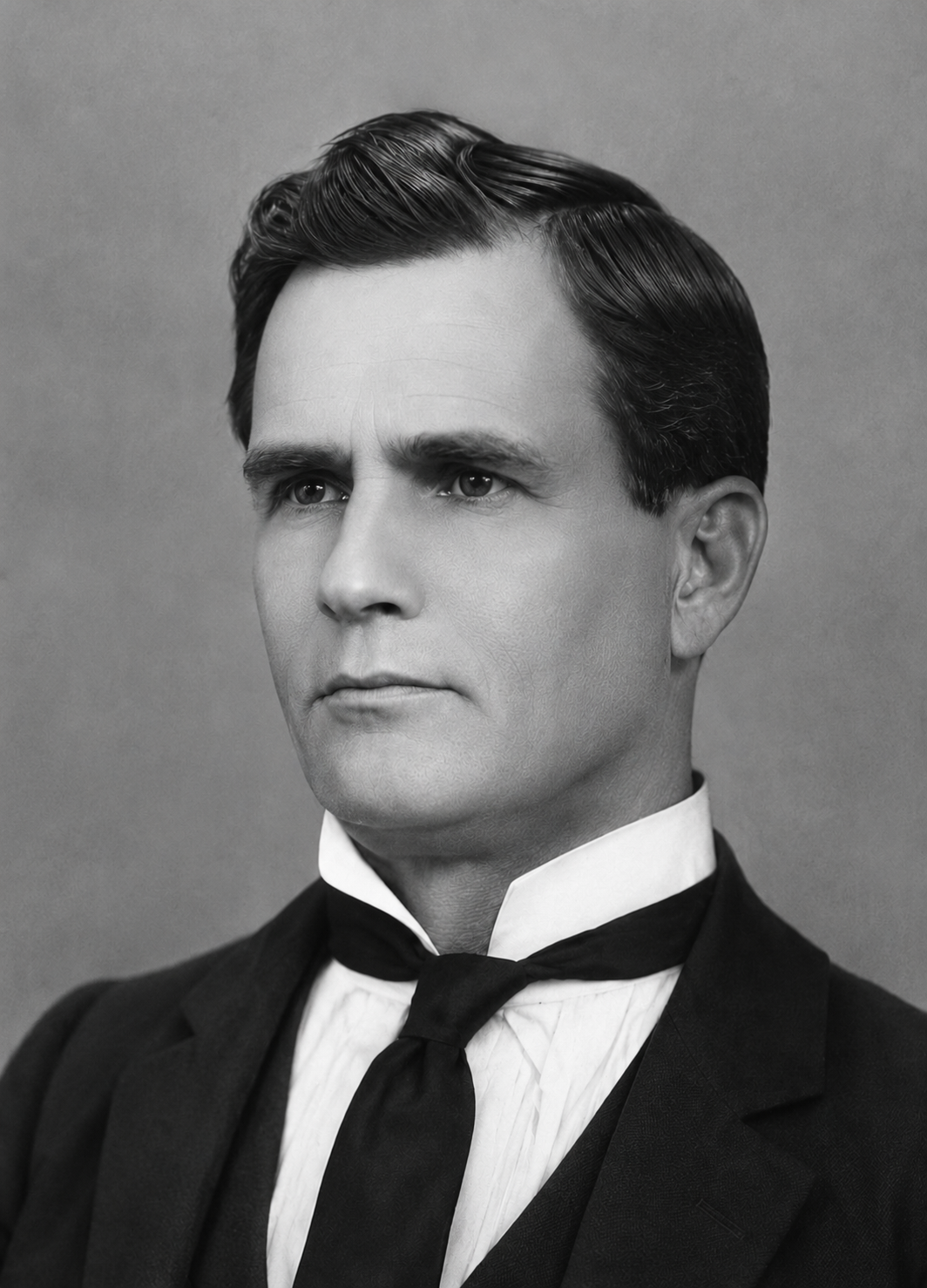

The Life of O. L. Hays
The subject of this sketch was one of the most respected gospel preachers of the early to mid twentieth century among churches of Christ in Arkansas, Missouri, and throughout much of the South and Midwest. For more than fifty years he devoted his life to preaching the gospel, conducting meetings, teaching singing schools, strengthening congregations, and winning souls to Christ. His life is a remarkable example of the influence one faithful Christian can have upon another, for the course of his life was forever changed through the efforts of his mentor and spiritual father in the faith, Joe H. Blue.
Oscar Lucas Hays was born on October 10, 1879, on Dry Creek in Howell County, Missouri, near West Plains. He was the youngest child of Edmund Deverick Hays (1822-1906) and Arrena Caroline Beard Hays (1837-1882). His father was of Irish descent, and his mother’s family was English. When Oscar was only three years old, his mother died, leaving him to grow up under difficult circumstances. Around the age of five, the family moved to the Wheeling community in Fulton County, Arkansas, where he spent his formative years.
Like many in that region, Hays was reared in the Methodist Church and was taught from an early age to respect religion and the Bible. Yet as he grew older, he became troubled by the conflicting doctrines taught by various religious groups. Although he was accepted into full membership in the Methodist Church, he remained dissatisfied and continued searching for a clearer understanding of God’s will. He later recalled that he could not reconcile some of the teachings he heard with what he was reading in the Scriptures. Determined to know the truth for himself, he devoted himself to personal Bible study.
During his youth Hays developed considerable musical ability and became known as a talented singer and teacher of singing schools. This gift would eventually place him in contact with one of the most influential figures in his life, gospel preacher Joe H. Blue (1875-1954). In 1903, Blue invited the young Hays to teach a singing school in the Morriston community of Fulton County, Arkansas. Shortly afterward, Hays began working as a farmhand for Blue, though he made it very clear that he had one condition for employment: Blue was not to preach to him.
The story of Hays’ conversion became well known among brethren throughout Arkansas. Each day after working in the fields, Blue would return to the house, hang a chart on the porch, and begin “practicing” his sermons. For several days Hays listened quietly. Finally, he reminded Blue of their agreement and protested, saying, “Brother Blue, you promised me you wouldn’t preach to me.” Blue replied, “I’m not preaching to you; I’m just practicing my sermon. You don’t have to listen.” Though Blue claimed merely to be practicing, the message of Scripture was having its intended effect. After several more days, Hays approached him and asked, “Brother Blue, would you take me down to the creek and baptize me?” Blue gladly did so, baptizing him in Little Strawberry Creek near Morriston in June 1903.
That baptism marked the beginning of a lifelong friendship and mentoring relationship that resembled that of Paul and Timothy. Hays later said of Blue, “It was through his teaching that I learned the truth.” For several years after his conversion, Hays traveled with Blue, directing the singing in gospel meetings while observing the work of preaching firsthand. Blue recognized the young man’s potential and eventually encouraged him to preach. On one occasion at a meeting in Randolph County, Arkansas, Blue unexpectedly announced that Oscar Hays would preach the next day’s sermon. Hays protested, but Blue insisted, telling him, “Yes, you are going to be a preacher.” Hays complied, and that sermon became the beginning of a ministry that would span nearly sixty years.
Throughout his life Hays credited Joe H. Blue not only with teaching him the truth but also with shaping his philosophy of ministry. Writing after Blue’s death in 1954, Hays reflected on the lessons he learned from his mentor. He praised brother Blue for always staying with the Scriptures, avoiding needless controversies, refusing to ride hobby subjects, and seeking peace among brethren. The advice Blue repeatedly gave him was simple: “Always stay with the Book.” Looking back after decades of preaching, Hays declared that he had never regretted following that counsel.
Only a few months after his conversion, on November 5, 1903, Oscar married Flora Leona Hall at Wheeling, Arkansas. Their marriage would last sixty years and prove to be a true partnership in gospel work. Leona faithfully supported her husband’s ministry through years of travel and sacrifice. Together they raised three children: Zelma (1905-1980), Oscar Lynne (1911-1984), and Viola May, who was born in 1920. Leona’s younger sister, Addie Hall (1894-1977), also became a long-time member of the household and was regarded almost as a daughter.
Immediately following his conversion, Hays began directing singing in gospel meetings and teaching singing schools throughout Arkansas and Missouri. He later attended the County Line Bible School at Brandsville, Missouri, where he received additional biblical training. By 1905, he had begun preaching regularly and soon became one of the pioneer evangelists helping establish and strengthen churches throughout Arkansas and surrounding states.
Over the course of his ministry, Hays preached throughout Arkansas, Missouri, Oklahoma, Texas, Louisiana, Kansas, Tennessee, New Mexico, and Idaho. He was instrumental in spreading the gospel into areas where churches were few and often weak. One of his notable accomplishments was helping establish the church in Lewiston, Idaho, demonstrating the broad reach of his evangelistic efforts. During the early 1920s, he also served as a field representative for Harding College, helping strengthen the relationship between the school and congregations throughout the region.
The census records provide a glimpse into the many places Hays lived while carrying on his ministry. In 1910 he was residing in Union Township, Izard County, Arkansas, where he was already identified simply as a minister. By 1920 he and his family were living in Ada, Oklahoma, continuing his preaching work there. The 1930 census places the family in Melbourne, Arkansas, where he was specifically listed as a minister in the church of Christ. Ten years later the family was living in Newport, Arkansas, where he continued his work as an evangelist and local preacher.
Hays labored with numerous congregations throughout his career. In 1932, he was preaching for the church in Cash, Arkansas, while conducting meetings throughout much of the year. By 1942, he was serving the congregation in Blytheville, Arkansas, and conducting a daily radio broadcast over station KLCN. This radio work enabled him to extend his influence beyond the local congregation and reach many listeners throughout northeast Arkansas and southeast Missouri. He remained in Blytheville until 1945. The following year he moved to Paragould, Arkansas, where he preached for the church from 1946 until 1952. During this period he was recognized as one of the most capable and respected gospel preachers in the region.
Hays was also closely associated with the church at Birdell, Arkansas. In April 1943 he preached the dedication sermon for the congregation’s new meetinghouse. He also baptized Ruth Menard in the waters of the Eleven Point River near Old Birdell, one of many conversions that occurred under his influence.
His reputation among brethren was exceptional. Writing in the Gospel Advocate in 1920, J. Will Henley described Oscar Hays as “one of our very best preachers.” He was equally admired as a song leader, and many remembered his ability to combine strong preaching with excellent congregational singing.
In 1952 Hays moved to Senath, Missouri, where he would spend the remainder of his life laboring with the local church of Christ. Although advancing age and declining health gradually limited his activities, he remained a beloved and respected figure among brethren. The congregation in Senath benefited from the wisdom and experience of a man who had spent more than half a century preaching the gospel throughout the nation.
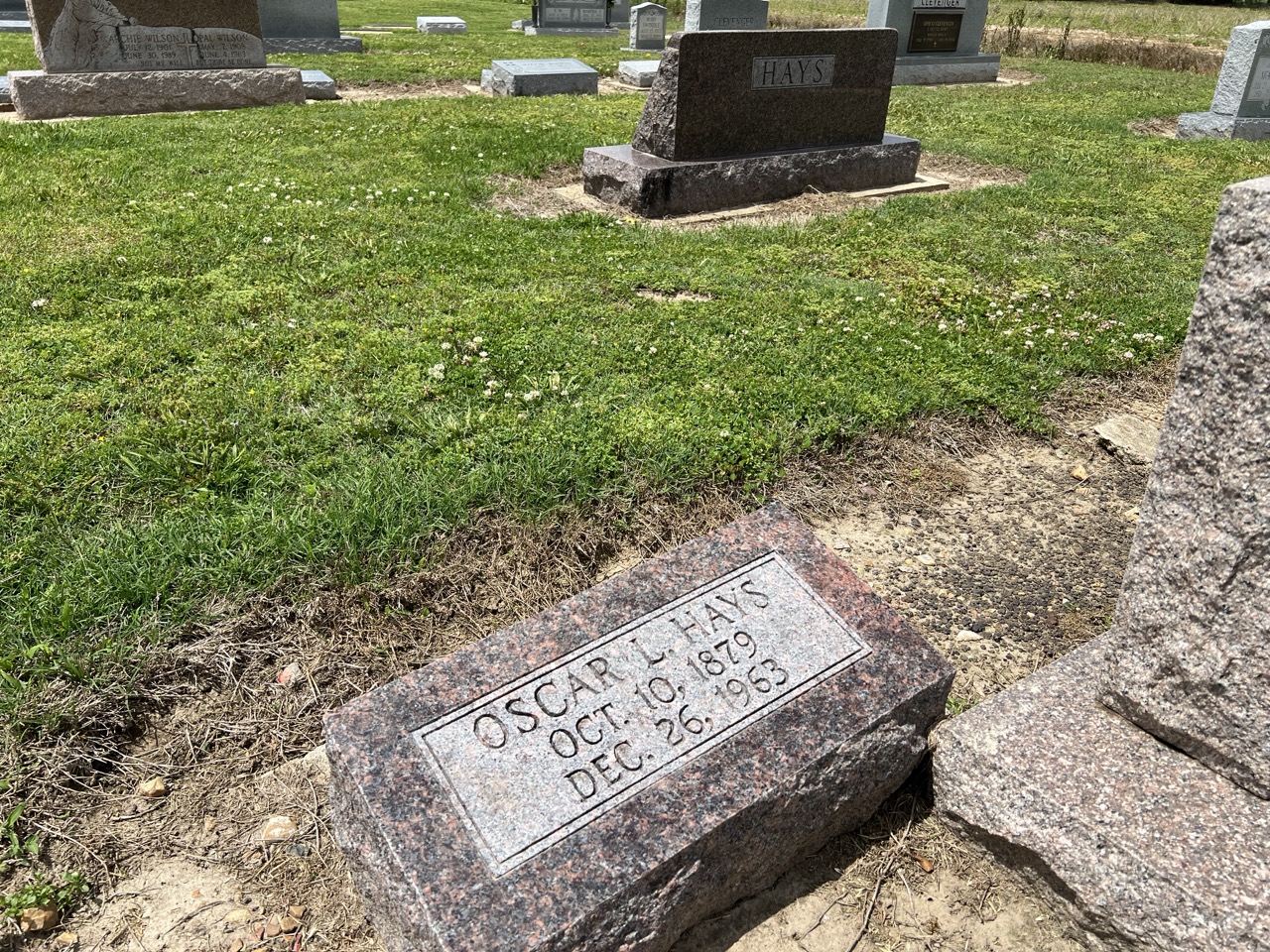
One of the final joys of his life came on November 5, 1963, when he and Leona celebrated their sixtieth wedding anniversary. Only weeks later, on the day after Christmas, December 26, 1963, Brother Hays suffered a fatal heart attack. He was eighty-four years old. Funeral services were conducted in the Senath church building by C. W. Brannam, assisted by Emitt Smith and Cecil Wilson. He was laid to rest in Senath Cemetery on December 28, 1963.
The influence of Oscar Lucas Hays extended far beyond the congregations he served. His life stands as a testimony to the power of faithful discipleship. Joe H. Blue converted him, trained him, and encouraged him to preach. Hays in turn spent nearly sixty years doing the same for others. Through countless sermons, gospel meetings, baptisms, and personal conversations, he helped carry the message of Christ to thousands. His steadfast commitment to “stay with the Book,” learned from his beloved mentor Joe H. Blue, remained the guiding principle of his ministry and the enduring legacy of his life.
Scott Harp, 06.22.2026 - Sources: Gospel Advocate, Firm Foundation, Arkansas Angels, other miscellaneous notations.
O. L. Hays
1879-1963
How fortunate can we get? When I called on Sister Leona Hays, wife of the late Oscar L. Hays for information regarding Brother Oscar L. Hays, she told me that Brother Hays had at one time set down the story of his life. She brought out an old composition book and there written laboriously with a pencil in longhand, in his own handwriting was the life story of Oscar L. Hays. Heretofore unpublished and unknown, it is given here.
Since you will want his story as he gave it, I shall add only a few points. He stopped his story in the thirties when he was around 60 years of age. Who knows why he stopped at the illness of his beloved wife? She recovered and still lives at Senath, Mo. today. Brother Joe H. Blue baptized both Oscar Hays and Brother Hays' wife, the former Leona Hall and sister to the gospel minister Albert S. Hall, before they were married. Brother Blue told me about Brother Hays' conversion. Brother Blue had hired Oscar Hays as a farm hand but Oscar made it plain that while he would work for Brother Blue that it would only be so with the understanding that Brother Blue was not to preach to him. When they would come in from the field at noon they would rest a few minutes after eating and before returning to work Brother Blue would hang up a chart on the front porch and start preaching. Oscar Hays said nothing for two days and then said, "Bro. Blue, you promised me you wouldn't preach to me." “I'm not preaching to you," Brother Blue said, “I’m just practicing my sermon, you don’t have to listen.” It wasn't many days until Hays said, "Brother Blue would you take me down to the creek and baptize me?" Yes, Sir he would, and did immediately.
Brother Oscar L. Hays was the most listened to radio preacher in Northeast Arkansas. His greatest work was done after his own writing ended. Brother Hays moved to Blytheville, Arkansas about the time America entered World War II and worked with the church there through 1946. The church sponsored a daily radio program during this time to which many congregations contributed. Brother Hays preached daily at 12:15 over KLCN the most listened to station in our area. There were no televisions and it was the heyday of radio. Eternity alone can measure the good he accomplished preaching on this program. Everyone for more than a hundred miles and in five states in every direction heard him.
Once four people approached him at the close of services and told him, "If it hadn't been for you, I would have been lost." Many questions were sent in and answered on this program. It did as much as any other thing to raise the image of the church In this section.
Bad health set in and Brother and Sister Hays moved to Senath, Missouri, where he lived until December 25, 1963, when the angels bore his spirit away. His funeral service was conducted by Brother Emmett Smith, assisted by Brother A. G. Lemmons and Brother Cecil Wilson. His body was interned at Senath.
But let me give you his story as he told it, "On October 10, 1879, I discovered America in Howell County, Missouri 7 miles west of West Plains near what was known as the Tank Pond, a pond that was made when the Kansas City-Fort Scott and Memphis railroad was built. I was born on a farm. My father, Edmond Devix Hays, was the father of 17 children; nine by his first wife and eight by the second. I was the youngest of this family and like all babies of most families was petted and almost, if not altogether spoiled. Any way, I have always had a desire to have my way in most cases.
In my early life, I suppose it was in the main like other boys of my time, except at the age of 4 years I lost my mother, the best friend any boy or girl ever had or ever will have. My mother's name was Arena Caroline Beard. I have only a faint recollection of her. Just three different times I remember seeing her. Once my father bought some brown sugar and they put it in some 1/2 gallon fruit jars, stone jars, and put it in a closet under the stairway. Somehow I just could not stay away from that closet until my mother found me in there and gave me a paddling.
I remember going to her bed one time while she was sick, and I remember my father leading me away from the grave after she was laid away.
A short time after my mother died, we left Missouri and came to Fulton County, Arkansas, near Viola. I do not remember just how long we lived there, but there was a thing that happened to me that I will remember. Father sent me to Viola after the mail, and as I returned, I ran into a flock of geese and an old gander who seemed to have the oversight of the flock. He made for me and deliberately took my arm in his mouth and proceeded to give me a pounding with his wings. I got away from that gander someway, I don't know how. Somehow, I have had a dislike for geese ever since that day.
Another thing I remember that happened while we lived at Viola; my brother Charlie, just older than myself, was riding a very high-spirited black horse, and of course he thought he must let, or make, it run, and it ran up to the gate and stopped suddenly, and Charlie went right over its head, landing on the corner of an old rail fence. His chin struck the sharp end of the rail, cutting it open to the bone. We thought he was ruined—just another experience common to boys. I recall a very sad experience in school while living at this place. Mr. O.K. Talley was the teacher. I had a pomegranate and a boy by the name of Charlie Seaton, some older and larger than I, took it away from me. Well, that started trouble in time of books, and Mr. Talley came to settle it. As a result, I lost my pomegranate and got a whipping besides. Whereupon I promised the teacher that when I became a man, I would whip him.
Our next move took us to Izard County near Philadelphia. Our post office was LaCross, then a nice little village. While we lived there I attended school at Philadelphia where J. Z. C. Gardner was the teacher, and a better one never entered a schoolroom. He treated every pupil as he or she deserved to be treated. We would have spelling matches and various entertainments, and every pupil was expected to take part. Here I made my first speech before the public. My father made it up and taught it to me. Here it is:
“Ladies and Gentlemen don't be amazed,
My name is Oscar Lucas Hays.
Although I am only six years of age,
you see I am mounted upon the stage.”
Another thing happened while attending this school. Mr. John, as we all called our teacher, used tobacco and he would permit the larger boys to get a little box and put sand in it to spit in during time of books. I did not have a box, but I sat by a window and I could spit out of the window. For some time Mr. John did not approve of my method, or ·perhaps he thought I was too short so he told me to throw my tobacco out. Well, I thought that if the larger boys could use it I should be permitted too, so I refused to obey his orders. He called me up on the stage, made me put my chew of tobacco in the stove and gave me. a whipping. Did I quit? No! When he let me go I put another chew in my mouth and proceeded to chew and spit all I pleased and told Mr. John if he would stop the larger boys I would be willing to stop. The results, we all used tobacco when we pleased.
While we lived here I had my first experience with sorghum making. Father and I went to the man who owned and ran the mill, Uncle John Hair. He would start out in early fall with his mill, one of his boys, two teams, and go from crop to crop, just as he was called. He was considered pretty rough and when father asked him when he could come to our place, he said,
"Uncle Dick I'll be at your house next Wednesday night week at moon down." He came on time.
The next day I was at the mill, because there was nothing else to do. I got a piece of cane and started to dip some foam out of the pan where he was cooking molasses, and Uncle John yelled at me, "You go to the house and sop in pots and pans where your sister is cooking dinner. If she will let you do that, you may come back and sop to your heart's content.” I was afraid to go near that pan.
Another thing that I shall always remember. I think I was seven years old; it was the Big Snow. It fell in February, I do not recall the exact date, but my father and the older boys, Tom, John, and Charlie shoveled out walks from the house to the barn, wood pile, smoke house, chicken houses, etc. If I remember correctly, the snow came about to the top of my head. On a Friday while that snow was on the ground, it was very cold and was referred to as The Cold Friday and The Big Snow.
I think it was Saturday after the cold Friday that two boys by the name of Lee who lived east of Melbourne were sent to Melbourne to the Mill (in those days we shelled some corn, put it in a sack, and took it to the mill and had it ground. That is the way we got our meal.) These boys got to the mill and started back home. The younger one gave out on the way back home and the other went on home for help. When they returned, little Johnnie Lee was dead. It stirred up considerable feeling in that entire country.
I do not remember just how long we lived at Philadelphia. There was not as much land on that place as we needed, so father traded his farm to Uncle Frank Smith for a farm on what was known as the Rock Bluff on Little Hurricane Creek about 5 or 6 miles north of Melbourne. Here we had all the land we needed to cultivate and much better range for stock. Shortly after moving to this place my only own sister married. She had been about the only mother I had ever known, so that just about ruined me. She married a Mr. Foster M. Billingsley, but back to Philadelphia just a moment.
While there I saw my first thrasher. It was called a Ground Hog, such a thing as a separator was unknown then. The power was furnished by 6 or 8 horses. The bundles of wheat or oats was fed into it by hand and the grain, chaff, and straw all came out together. They would spread about 2 wagon sheets on the ground for it to fall on, then the straw was raked off with pitch forks which were often made of wood. The wheat and chaff was dipped up and put into the fan that was turned by hand. In this way the wheat and chaff was separated.
There at Philadelphia I saw my first cotton gin too. It had only one stand, 50 saws and I think it was fed by hand. The cotton was placed on a table and a man would scatter it along in the gin. There was no such thing as a condenser. The lint would pass from the gin stand into a room that was air tight and when a bale was ginned, everything would shut down and all hands would go into the lint room and carry the cotton out and put it in the press. Two men would usually get in the press and trample the cotton as it was put in. When it was finished two horses were hitched to a lever that was connected to a Iarge screw, on the upper end of this screw was a block, just as wide and long as a bale of cotton. The horses going around in a circle would press the cotton. The gin was run by horse power and 12 bales a day was considered a big day’s work.
From the school at Philadelphia came some great men. Doctors, lawyers, preachers and professional men in almost every walk of life. Dr. Will Horton, Dr. Bob Ashley, Dr. Theodore Jeffery, Dr Billingsley, Pleas Billingsley, (Sheriff) Ed Billingsley, (merchant), G. T. Lacy (Tax Assessor), Sam Hill (Lawyer and Congressman from Washington state,) Arthur Washburn (teacher), one superintendent of the School for the Blind at Little Rock, Connie Gully, a very successful business man, and many others whom I cannot recall just now. These were all practical and successful men and none of them ever played football or basketball, but they learned their lessons. In addition to that they were taught the highest principles of morals.
After moving to Hurricane, I attended school at the Hurricane school house which has long since ceased to exist. Mr. G. W. Cypert was my first teacher there and he was a great man. Miss Nan Wilkerson of Fulton County taught 2 or 3 terms there. This great woman, in after years, had a great influence in making me what I am and what I have been.
After my sister married, home was never the same. My half sister, Sara Whitaker, who was a widow, came to keep house for us. My two older brothers Tom and John were gone. Just father, Charley, and I were there. She stayed for some time until another half sister, who lived in Big Bottom in Independence County lost her husband (Jim Morris) and Ieft her with several small children, so sister Sarah moved out and Inda came to keep house for us.
Well, I guess I was a bad boy, but one thing is certain I never sneaked around and tried to cover up. I was then about 10 years old. We did not or could not get along. The 18 months she lived with us, to this day, was and is, the most unpleasant part of my life. She married Mr. M. H. Melton and after she left us we batched the best we could for a while. Then father married Aunt Beckie Langston up near Pineville. She was a good stepmother. She owned a farm near Pineville and about a year after they married we moved to her farm and father sold his. After this move I went to school at Flat Rock which was about 2 miles from home. The school house was built of logs. Jim Evens was the teacher and he was a good teacher. Other teachers that I went to at this place was Oliver Goodman, J .B. Roe, and others.
Another thing I wish to mention in this connection, my stepmother had a large dog that was half Newfoundland and half Bulldog of the large type. He was about as large a dog as I have ever seen. His color was light yellow and his name was Dave. He was the only dog I ever really loved, but he was really my friend. I could tell many interesting things about this dog, interesting to me but perhaps to no one else.
Shortly after we moved up there Charlie left us and started out for himself leaving me alone. Our neighbors were not the type of people that I had been raised to associate with. The Hulands, Gorgsbies, and Davis’ all lived near us. In fact too near for comfort and pleasure. They all had the reputation of taking things when you were not looking or asleep, thus we lost lots of corn, meat, chicken, and tobacco.
Our place was out of the way. In fact it was at the end of the road and when we saw someone coming, we very well knew they were coming to our house or else they were lost. This condition was very unpleasant, so I stood it as long as I could. I pleaded with father many times to rent or sell the place and move out into a good community, but my stepmother would always say, "I will not sell or rent my home," so at an age between 17 and 18 I left the old lonesome place. I had a heavy heart when I put my meager belongings into a 25-pound flour bag and started out.
I went to my sister's, Amanda, near Philadelphia. She and her husband took me in but did not have any work for me to do, and I had to work for I needed clothing. So, I got a job working on the farm for Uncle Atlas Dodd. He gave me board, bed, and washing and 25 cents a day. We went to work early and worked until late. Often it was after dark before we quit. We knew nothing about labor unions and 8-hour days. I worked a month and he paid me all at one time $6.50 the most money I had ever had at one time. I felt my independence, and I went to Melbourne and bought some clothes, such as I needed. That was in the winter. Then on March the first in that year, I went to work for Jim Evans, my old school teacher, for $6.50 a month board, bed and washing. I worked for Mr. Evans four months or until his crop was laid by, and he owed me about $22.00 to be paid when he sold his cotton.
Here I had another sad experience; Jim McGovock came and told me that Mr. Evans had his last bale of cotton and if I ever got my money, I would have to run a laborer’s lien on that bale of cotton, so I went to Bob Ashley, a Justice of the Peace and an old school mate and he fixed up the papers. I carried them to the Constable of that township, Owen Edmonson who went to the gin, found that bale of cotton which had been sold to Steve Matthews, a merchant at Pineville, Arkansas, and he put a notice on the bale forbidding anyone to move it until the $22.00 labor bill, together with all the cost, was paid. Mr. Evans was working at the gin, so the Constable brought my money to me. That was my first and last experience with the law, where I was directly involved.
Some few years later, I was at a singing at Unity Baptist Church about 3 miles west of Newburg, Arkansas and two boys got into a fight, Marion Carter and Tom Everett. Tom stuck a knife in the Carter boy, and he died the next day. I was summoned as a witness, but was not put on the stand.
About this time my sister, Amanda, moved to Jackson County, where Battle Ax now is. Her husband, Foster Billingsley wrote me to come down and work for him, as I remember it was in January. I stayed until the next October, and I began chilling. It took me about 18 months to get over those chills.
MY RELIGIOUS EXPERIENCES
From my early childhood, I wanted to be religious. My father was a Missionary Baptist, and my brothers and sisters were Baptist and Methodist. I was raised under that condition and with the popular idea that it did not make any difference what church you belonged to, just so you were saved. That idea puzzled me very much; if it made no difference, why not all belong to one church, but I was sold on the idea of getting religion, at the Mourners Bench, that was all I knew. All the denominations practiced that system then. So at the age of 12 or 14, I went to the Mourners Bench at Old Chapel Hill Church, a Methodist church, about 7 or 8 miles north of Melbourne in Izard county, Arkansas, I was in earnest and they told me I had it, just get up and tell it. I did, but I always had a doubt, but I joined the Methodist church even though I was never satisfied with it at all. However, I dragged on for a while.
My father, being a Baptist, would tell me baptism was by immersion, so I decided to read the Bible. I did not know when I joined the church that there was an Old and New Testament. As everyone knows, you do not need the Bible to be a Methodist. The same may be said of all the denominations, for they were mentioned in it. After reading the Bible for some time, I began to question sprinkling for baptism and especially infant sprinkling.
I went up to Union in Fulton County, Arkansas. There I met with a Methodist preacher, a cousin by marriage by the name of Will Story. He tried to explain it to me, and finally he said, "Oh well, it don't really make any difference whether you were baptized or not." I asked him why practice it then, and if that be true it was easier to go to heaven than to get into any church, to which he replied, "Look out boy, you are drifting toward the Campbellites." Well, I knew nothing about the so called "Campbellites." So to keep me out of what he considered a very dangerous condition, he suggested that I talk to Uncle Billie Spence, an old Methodist preacher and school teacher.
At the first opportunity I talked with him, we met at Uncle Guss Beards, my own uncle and a strong Methodist. Uncle Billie referred me to Acts 16th chapter to read of Lydia and her household, also the jailer, and his household. Well, I read it all and told him I failed to find where any were baptized except believers, no babies there. (Then I reminded him that Jesus told the apostles to teach and baptize the believers. Matt. 28, Mark 16. Then he said, "My boy you are headed toward Campbellism, you had better be careful. I told him if believing and doing just what the Bible said would make a Campbellite, then I thought we should all be Campbellites.)
I then went to a Baptist preacher next, Mr. Aaron Merchant. I told him I could accept baptism by immersion, but could not understand his close communion or once in grace always in grace, regardless, and cited him to Judas Iscariot and Annanias and his wife. He said, "You just don't understand, you be at the brown school house and I will preach on that for your benefit." So I went and it was as clear as mud. After preaching, he came to me and asked me what I thought. I told him I was more confused than ever and another thing I could not understand, one time you preach that salvation is by grace, not works at all, then you preach that we must believe and that is all. He very politely replied, "Young man, what you need is Faith in Jesus Christ." I told him I believed that Jesus Christ was God's Son and that he died to save us from sin, but I believed we must obey him before he will save us. He said, "I would like to talk with you more, but I must go, Good-by." He never talked with me again.
A short time after this, Mr. Steve Jones, one of the best singers I have ever known, started a singing school at Union, Arkansas. He begged me to attend that school, assuring me it would cost me nothing. I loved to sing and longed to know more about it, so, I went twenty days.
It was in August, and the October following, I went to Wheeling, Arkansas in Fulton County and worked for Robert Beard, my cousin. He lived near the Wilkerson Family, and they were strong members of the church of Christ. There was quite a large congregation of Christians around about a mile and one-half from where I was working. Someone was holding a meeting for them, so I went just to have somewhere to go. The singing was very poor, so I began talking of a singing school. They all seemed to fall for it, so arrangements were made, and the school began. It was their first school and my first, so we had lots of fun, and the school was a success. That was more than 50 years ago, and its influence still lives.
There in school I met the prettiest girl I ever saw. Her name was Leona Hall. She was just a little shy and I liked that fine. We would gather at different homes through the week for singing and every home in the community was open to us. I taught Leona to sing alto and never was there a better alto singer. When I first met her I said that girl was mine and after four or five years I persuaded her to change her name to Leona Hays.
In about the year 1896, we had a very dry year; all the crops except wheat and oats were a complete failure, so in February of 1898, I left Arkansas and went to the Indian territory. I spent almost two years at Beggs in the Creek Nation and at McAlister in the Choctaw Nation. While I was at McAlister, I worked for the M. K. & T. Railroad. While working there I had yellow jaundice and the company doctor sent me to Sedalia, Missouri to the hospital. That was my first experience with hospitals. Upon the advice of the doctor, I went back to Arkansas.
While singing with those people around Wheeling and at the church at Harmony, I had the opportunity to hear some real good preachers. I also attended a debate at Harmony between Joe H. Blue of the church of Christ and Sam Ballard, Baptist, so I had learned some truth. Nevertheless, it was hard for me to give up entirely my former teaching.
In March 1903, I went to work for Joe Blue on Little Strawberry Creek near Morriston, Arkansas. It was about the first of June when I asked Joe to baptize me. There in the presence of sister Blue and their two little girls, I was baptized in Strawberry Creek just below Joe Blue's barn.
The next Sunday I attended church at Harmony, news did not travel in those days as fast as it does now (1953). I led the singing, had a part in the Bible lesson, and when the emblems were passed, took them for the first time. I will never forget it; half the congregation was crying. The rest were smiling, indeed a happy band. After we were dismissed, they all gathered around me rejoicing. Many told me how long they had been praying for me.
Since a boy I had a desire to preach. Now that I had learned the Truth, I wanted to preach more than ever. After attending church that first time I went to see Leona. She was convinced of the Truth but had not yet obeyed it. I told her what I had done, and she did not comment on it very much but reminded me of some things I had said about it when I was in the Indian territory. She wrote me about Brother Bynum Black's meeting at Harmony and praised him very highly. I told her she could join the Campbellites and go to hell if she wanted to but not me.
Brother J. H. Curry of Ravenden came that summer and held a meeting at Harmony. During that meeting she obeyed the Gospel, and Brother Joe Blue baptized her.
On November 5, 1903 at 5 o'clock we were married, at her home near Wheeling, Arkansas by Brother P. D. Southard. In just a short time we set up housekeeping in a one room log house on Jim Oldfield's farm near Harmony church.
We made a share crop that year. Leona's father and mother had passed away and left seven children, Addie the youngest was about seven years old and we took her and our home has been her home all these years. She never married.
The next two years we farmed the Barnie Lynch place about a mile north of Harmony church. During this time I would sing in meetings at nearby churches with such preachers as Joe H. Blue, S. C. Garner, W. A. Goodwin, Bynum Black, J. H. Curry, E. M. Borden, J. Will Henley, and others.
In 1905, I began preaching. My first effort was at the Old Glaze Creek in Randolph County about 15 miles north of Pocahontas, Arkansas. Joe Blue and I were in a meeting there. We were gone about two months on that trip. I will never forget it. I borrowed $3.00 to start out with, and I got home with 75 cents. I then began preaching at Morriston, Viola, Elizabeth, Wild Cherry, and Cedar Bluff. Sometimes I would receive as much as $3.00 for preaching Saturday night, Sunday, and Sunday night. Just whatever was contributed on that Sunday was the preacher's pay.
On the 18th of March, 1905, while we were living on the Barnie Lynch place about 2 miles west of Wheeling, Arkansas at 12:30 a.m. there came to our house the prettiest and sweetest blue-eyed, golden haired little girl that ever lived. We thought she was so sweet and cute that we just proudly accepted her as our own and we named her Zelma Agnes.
That was a trying experience, one I will never forget. Dr. J. B. Kent was the doctor, Aunt Georgia Climer and Mrs. Adda Chestnut were our nurses. She was a sweet baby and is now and always has been a sweet girl.
She will be 50 years old the 18th of next March. We lived on the Linch place 2 years, then we moved to Morriston, Arkansas. Bro. Joe H. Blue, who recently passed away, persuaded us to make that move. We lived there a little over a year and moved back near Wheeling, Arkansas, on the old Bill Chestnut place. We lived there until November of 1908 and then moved to Calico Rock in Izard county. I began preaching for the church there once a month. Shortly after moving there I attended a debate at Oxford, Arkansas, between John L. Fry of Rector, and Ruff Landers.
Elders of the church at Melbourne, Arkansas asked me to preach for the church there once, and I said I could not do that, and they wanted to know why. I said "Me? Follow such men as H.J. King, S. C. Garner, W. A. Shultz, E. M. Borden, the best preachers in the brotherhood? No, I can't do that." I was there on time in that year of 1909. I held the meeting alone. This was the old Antioch Church east of Batesville, Arkansas, in Independence County. I will never forget it, the building once belonged to the Baptist, several years before.
Brother W. A. Shultz, just a boy preacher, held a meeting in the community. The Baptist challenged him to meet a Mr. Hunt in a debate. Hunt was an experienced debater, but after the debate was over Brother Shultz preached a few nights and converted the entire congregation and got the meeting house. I baptized twelve in that meeting, and some were restored.
In the spring of that year the brethren at Melbourne asked me to hold a meeting there and I liked to have fell out again. I said, "I can't, get Brother Borden or Brother Blue."
They said, "We want you." I reluctantly gave in and how I dreaded that meeting. It began the second Sunday in September. I baptized twenty eight and about sixteen were restored. Then I learned it was as easy to hold meetings in town as anywhere. I preached for them seven years once a month and held the meeting each year, and when I refused to hold the eighth meeting they did not like it. Eight years I lived at Calico Rock where I preached once a month and held six meetings. I don't remember how many meetings I held after I left there and moved to Ada, Oklahoma.
I preached at Norfork and Arkanna in Baxter County, and Flippin in Marion County, Newburg, New Liberty, Franklin, Wild Cherry, Sage, Unity, Gunion and Sandy Flat and Twin Creek all in Izard County, Mountain View, Cold Water in Stone County. I also preached at Batesville, Magness, New Ark and Bethesda in Independence County.
On May 28th at about 8 a. m. on Sunday a little boy came to our home. We claimed him and was proud to give him a home. We named him Oscar Lynn. Doctor Harlan Smith was our doctor and Sister Arch Garner was the nurse. It was my day to preach at Calico Rock and in spite of my excitement I preached. Mother and boy got along fine. Lynn was not a strong healthy child until he was 12 or 14 years old, but was all boy, always adventurious and often getting the worst end of his adventures.
In 1916, we moved from Calico Rock to Ada, Oklahoma. Lynn was about 3 years old. He went to his first school at Ada. We had taught him not to fight, but one of our neighbors had a boy that was some bigger than Lynn, his name was Foy Watson. Almost every day Lynn would come home crying. Foy would kick, slap and throw him down. They had to go the same street. This went on until it seemed something had to be done. So, we told him not to start anything, but if Foy tried again and if he did not whip him we would whip Lynn. So that very afternoon Lynn came home not crying, but shouting, "Mother, I did it." When she asked what he had done, he said, "I whipped Foy Watson." We had no more trouble with Foy.
While we lived at Ada, I preached almost all over the state, besides holding many meetings in Texas and in Arkansas. While living there on the 9th day of September about 6 p. m. a little girl with black hair and black eyes came to our house. We gladly received her as our own. The doctor that helped to bring her there was Sister Cassie TheldkiII and Sister Brown was the Nurse. We named her Vola May. She, like Zelma and Lynn, was a sweet baby. She was healthy and strong, because of her black hair and eyes, we called her "Little Choctaw." Ada was in the old Choctaw Nation.
About 1924 we moved to Tuckerman, Arkansas. I went about the first of the year when Zelma was finishing high school in the spring and we thought it best for them to stay at Ada until school was out then they came on to join me. Hubert and I met them in Little Rock, I was so glad to see them, I had rented a house in the North part of town. We soon had everything fixed up and living at home. While there I preached half time at Tuckerman and half time at Newport.
While we lived at Tuckerman, Leona came down with gall stone. She had been bothered with them for sometime. Dr. Norris said she would have to be operated on but suggested that we call another doctor if we wanted to so we called Doctor J. B. Roe, who lived at New Ark, Arkansas. We went to Newport to her sister's home Ema Coe, and after Dr. Norris and Dr. Roe examined her, they said she must be operated on as soon as possible. They suggested Dr. Bently of Little Rock as the best, so the next day we went to Little Rock. Dr. Norris went with us and after Dr. Bently examined her he sent her to St. Vencent's Hospital. States where I have preached include Texas, Louisiana, Arkansas, Missouri, Kansas, Oklahoma, New Mexico, Idaho, and Tennessee. Counties In Which I Have Preached: Arkansas; Ashley; Union; Hope; Pine Bluff; Lone Oak; Crittenden; Mississippi; Green; Clay; Craighead; Lawrence; Randolph; Sharp; Independence; Fulton; Izard; Baxter; Boone; Marion; Little River; Sebastian; Pulaski; Conway; Jackson; Stone; Cleburne; Hot Springs; Benton; and Woodruff.
-Arkansas Angels, Boyd Morgan, pgs 111-122.
O. L. Hays
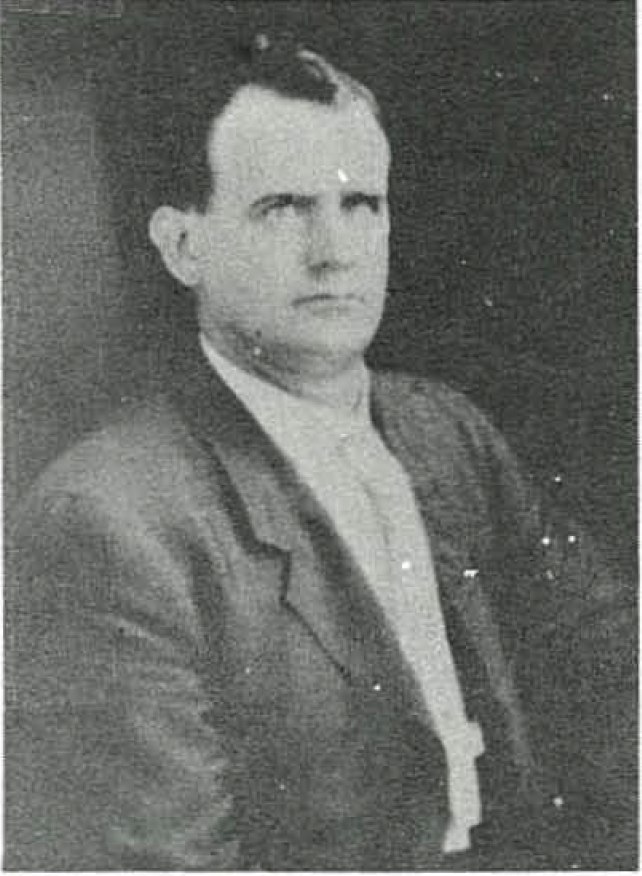
Source: Arkansas Angels
O. L. and Leona Hays
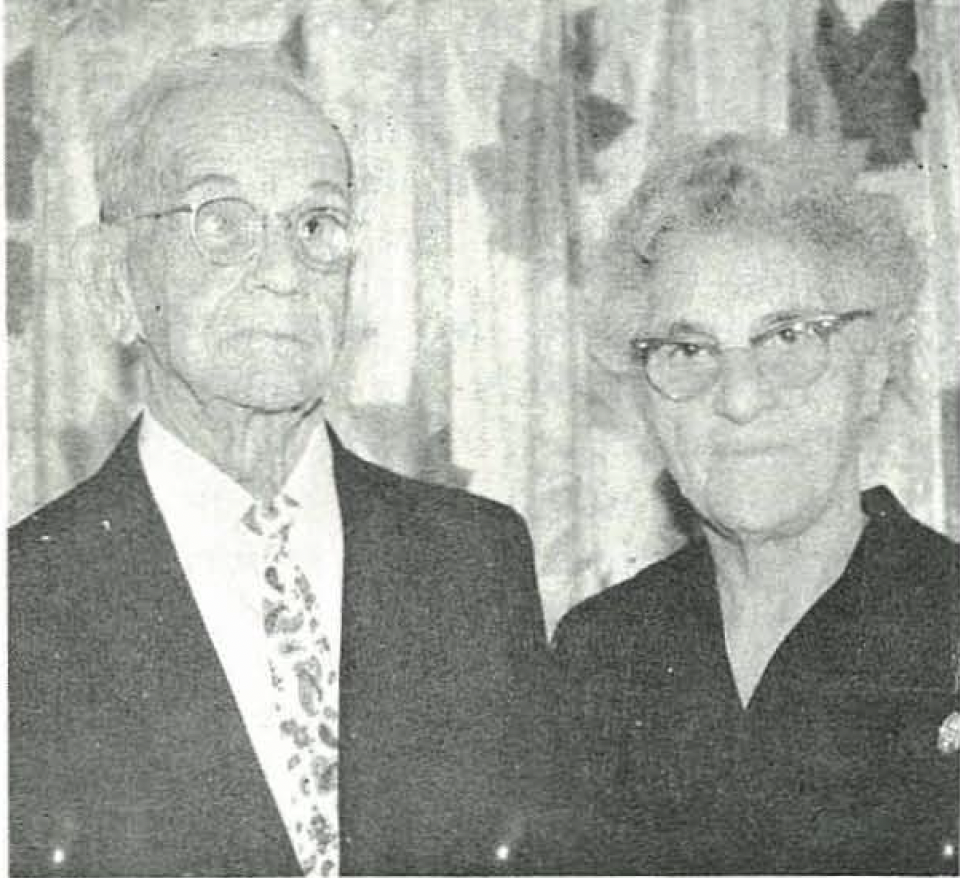
Source: Arkansas Angels
Reports
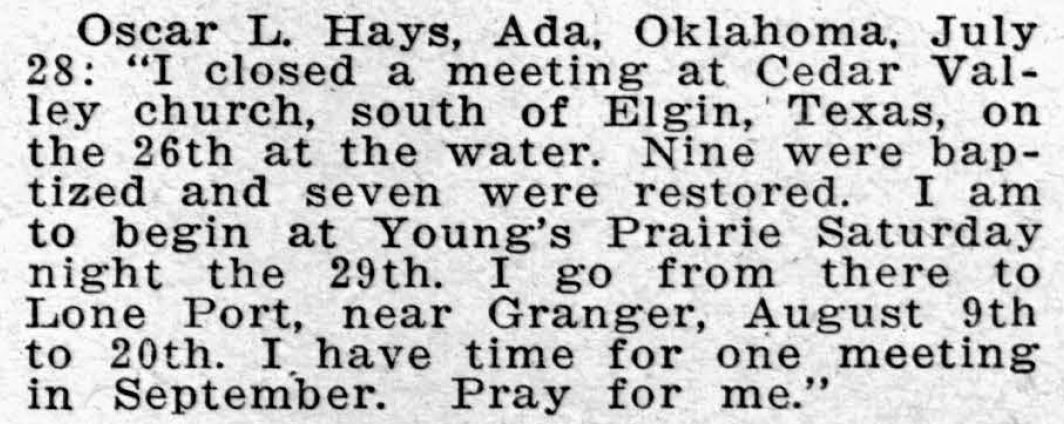
Firm Foundation, August 8, 1922, p.8
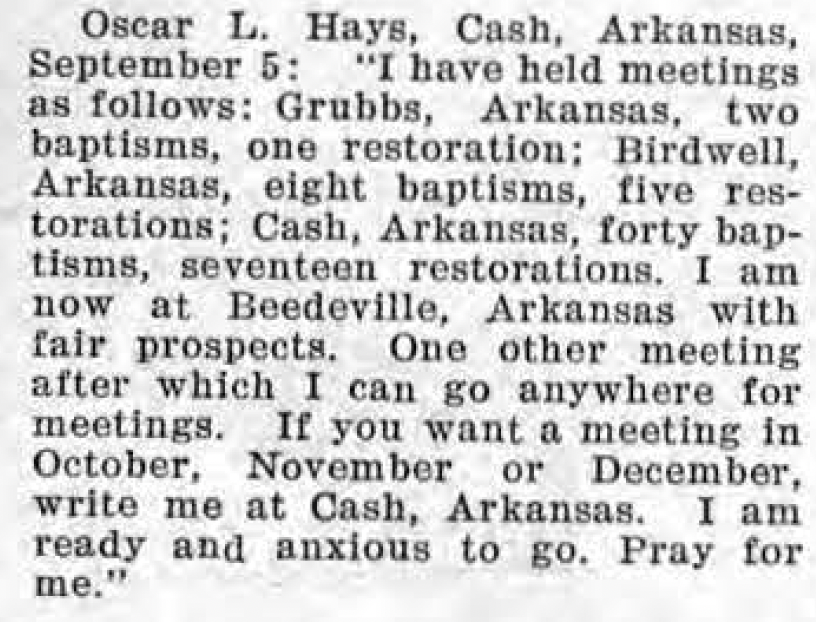
Firm Foundation, September 20, 1932, p.6
Song Leader For Gospel Meetings, O. L. Hays Endorses Songbook
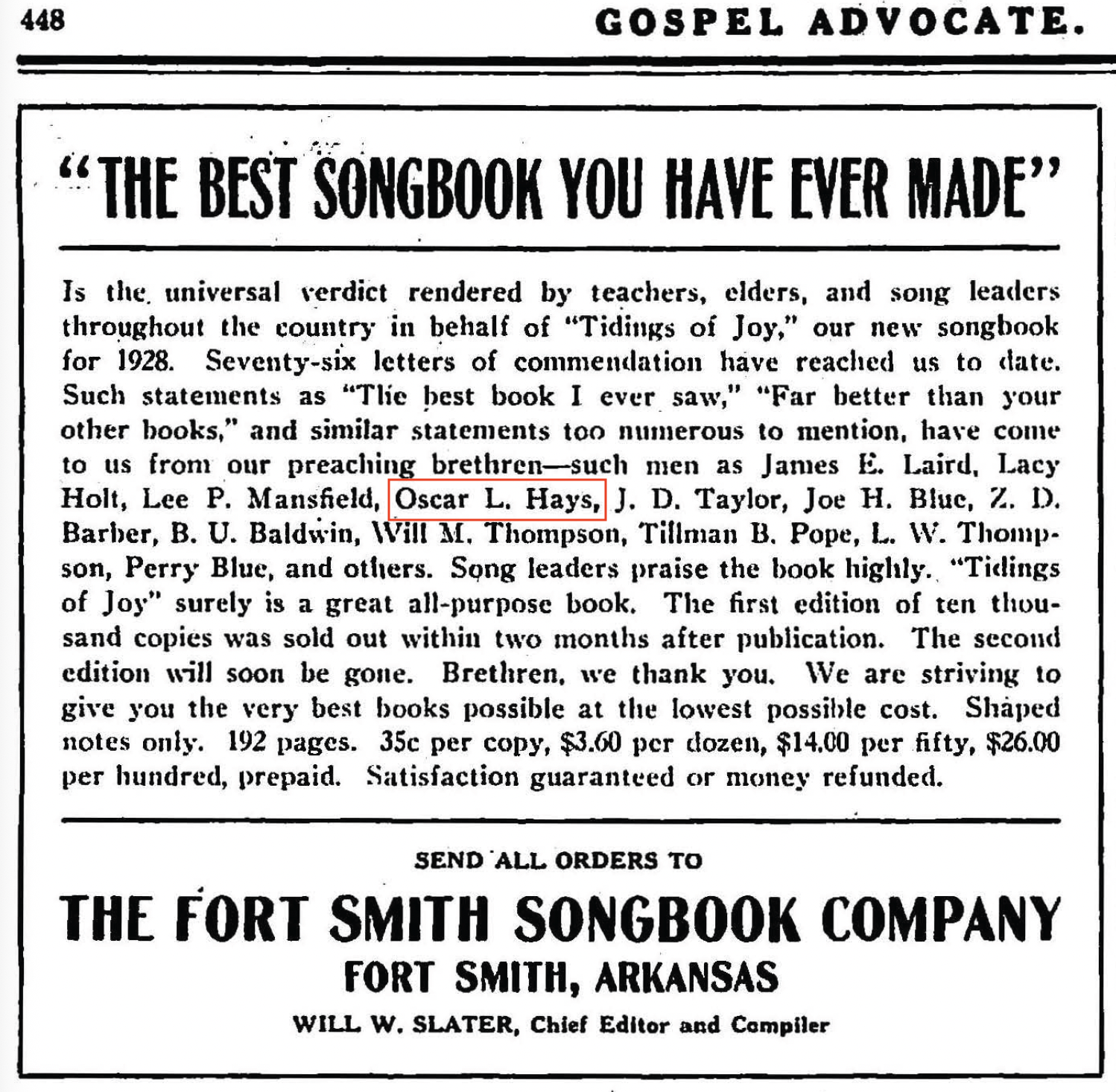
Gospel Advocate, May 10, 1928, p.448
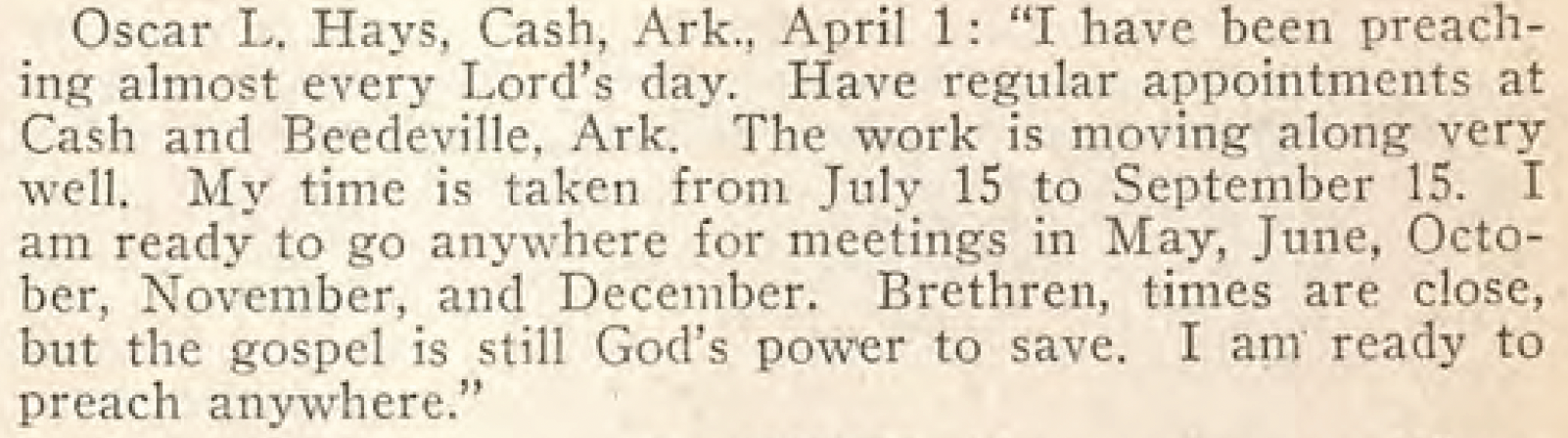
Gospel Advocate, April 7, 1932, p. 443
Obituary For Joe H. Blue - O. L. Hays' Father In The Faith
O. L. Hays wrote the following when Joe H. Blue died. Blue was his father in the faith and Hays tells about how brother Blue converted him:
Joe H. Blue was born September 18, 1875. Death has claimed another great man, gospel preacher and debater. Only one man remains with us that has held more debates than Brother Blue. C. R. Nichol is that man. I think that I know more about Brother Blue's early life as a preacher than any man living. It was through his teaching that I learned the truth. I was teaching singing schools in that section of the country and Brother Blue invited me to come and teach a singing school in his home community (Morriston, Ark.), in March of 1903. I began working on the farm for him in May of that year and he baptized me in Little Strawberry Creek near his home. From then on for several years I went with him and directed the singing in meetings for him. In all the years that I have known him and associated with him, I never heard of him turning down a call or asking how much will you pay. I was with him on several trips when we would not get our expenses. We were at the Glase Creek Church in Randolph County, north of Pocahontas, Ark., and without my knowledge or consent he announced at the close of the service one night that Brother Hays would preach the next day at 11:00 A. M. I protested, but without success. He said, "Yes, you are going to be a preacher." I tried, and that was the beginning of my career as a preacher. I was with him in many meetings after that. He set many examples that have been of great value to me. He always stayed with the Book. He never rode a hobby. He never started a church fuss, although he was called on many times to help settle troubles, but he would never take side with anyone. He would plead with all concerned to stay with the Book. I am now seventy-five years old, and after forty-eighty years in evangelistic work, I have no regrets that I followed his advice to "Always stay with the Book." Though he has crossed over the Great Divide, his work still lives in the hearts and lives of many. I would to God that all gospel preachers would follow his example and advice.
Oscar L. Hays.
Will Someone Please Help Me
Oscar L. Hays
Senath, Mo.
A 1958 Open Letter to the Brotherhood
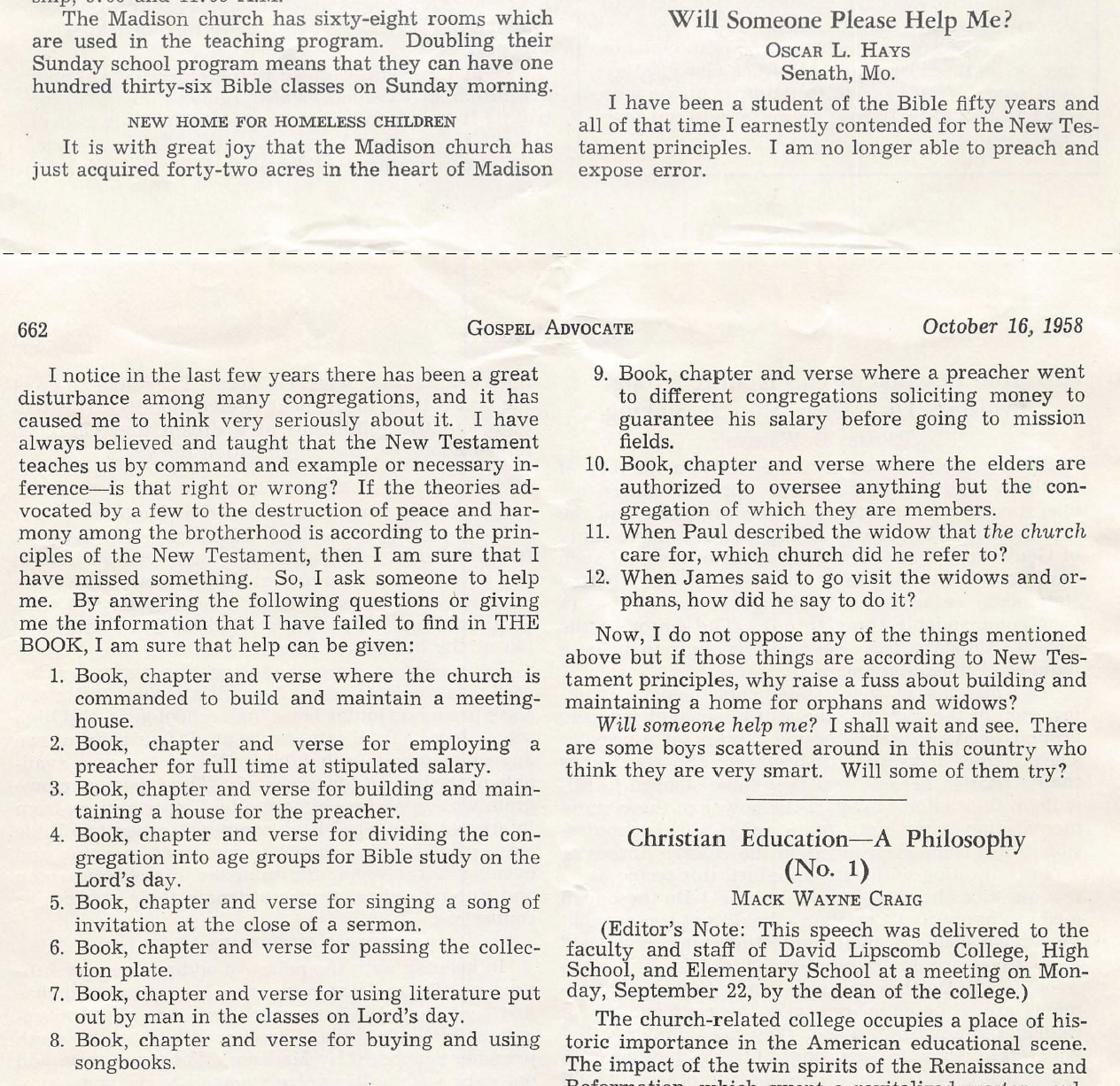
Gospel Advocate, October 16, 1958, pgs. 661-62.
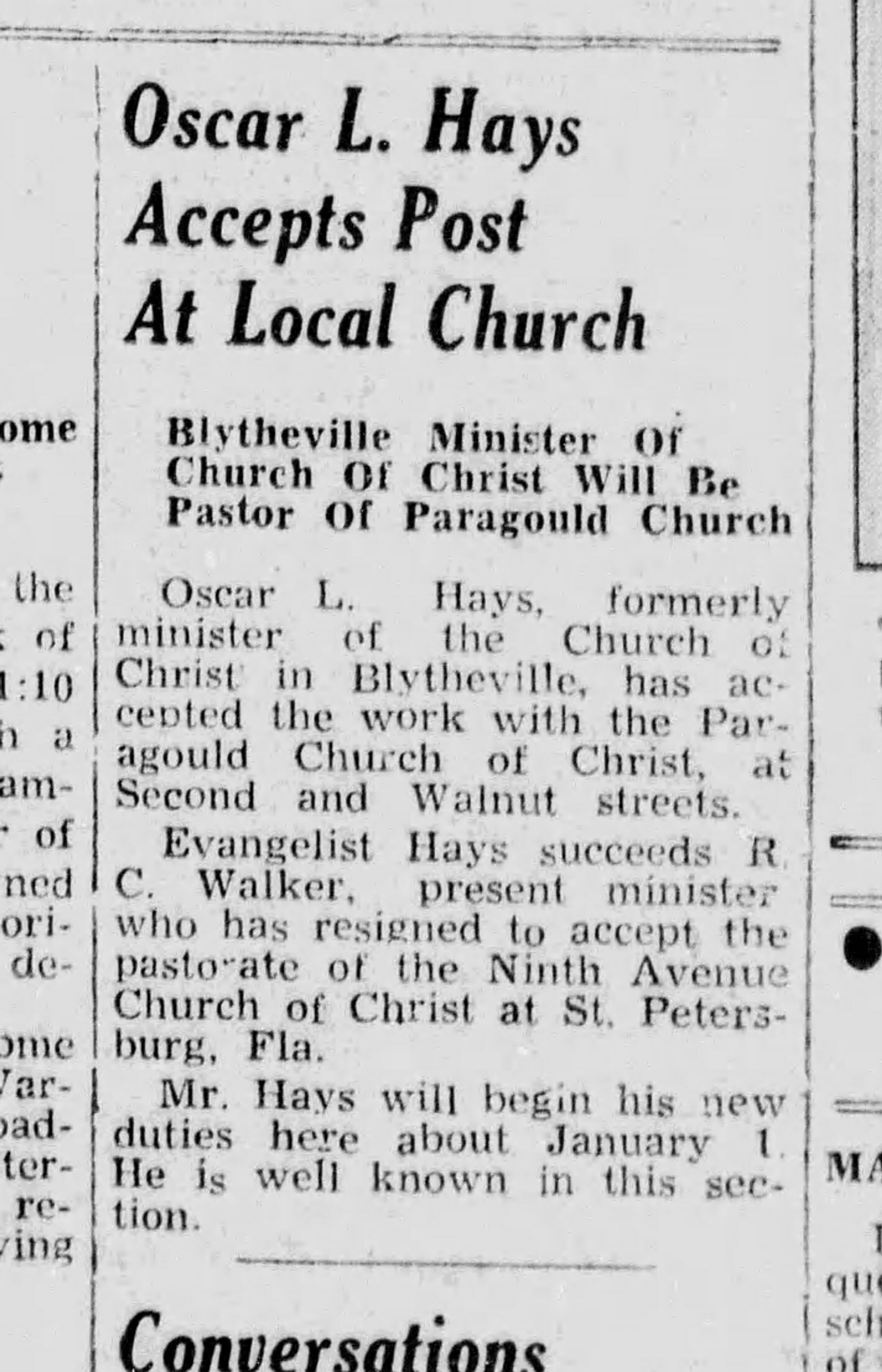
Paragould Daily News, Paragould, Arkansas
Friday, December 21, 1945, p. 1.
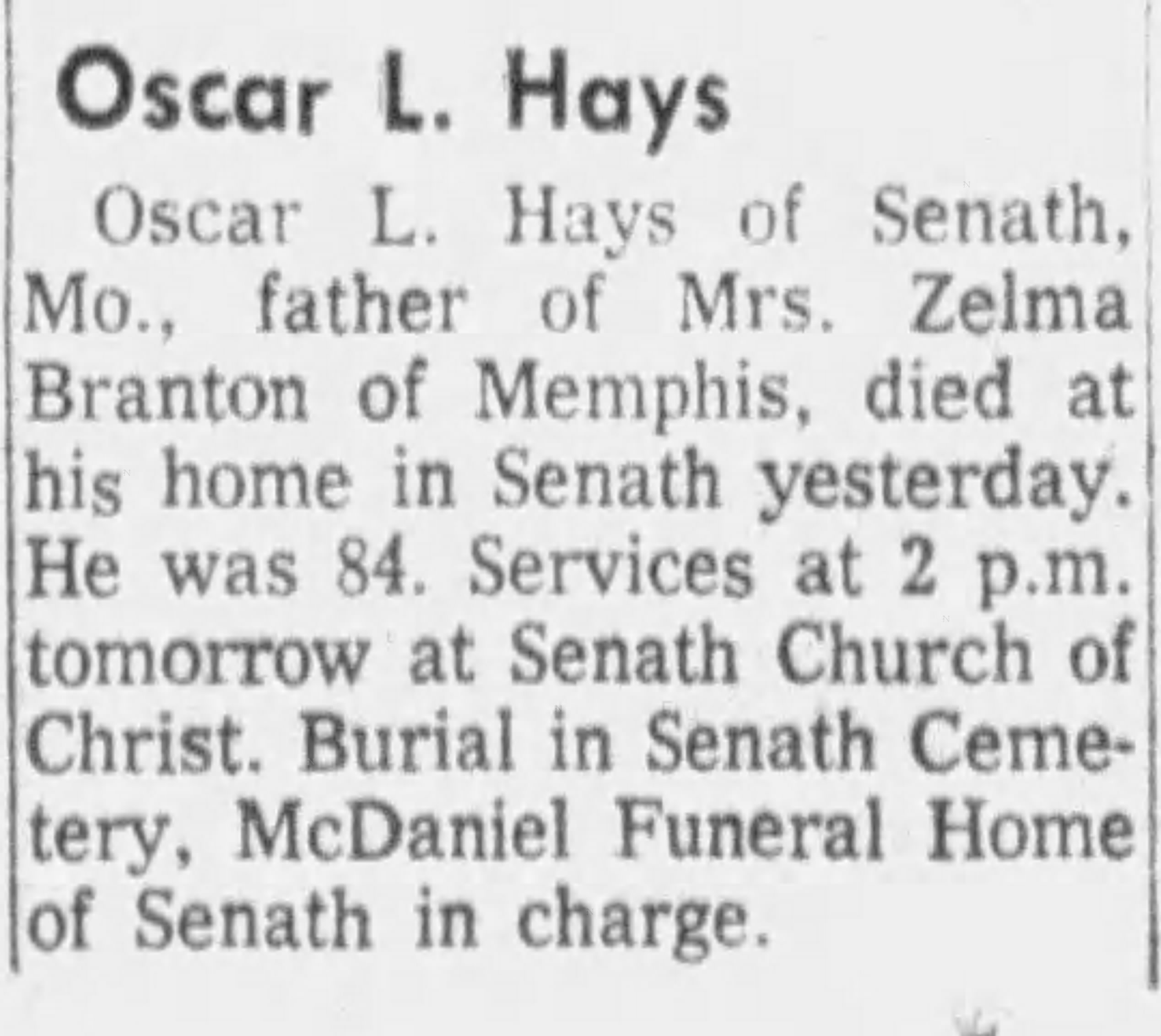
The Memphis Press-Scimitar, Memphis, Tennessee
Friday, December 27, 1963, p.13.
Directions To Grave
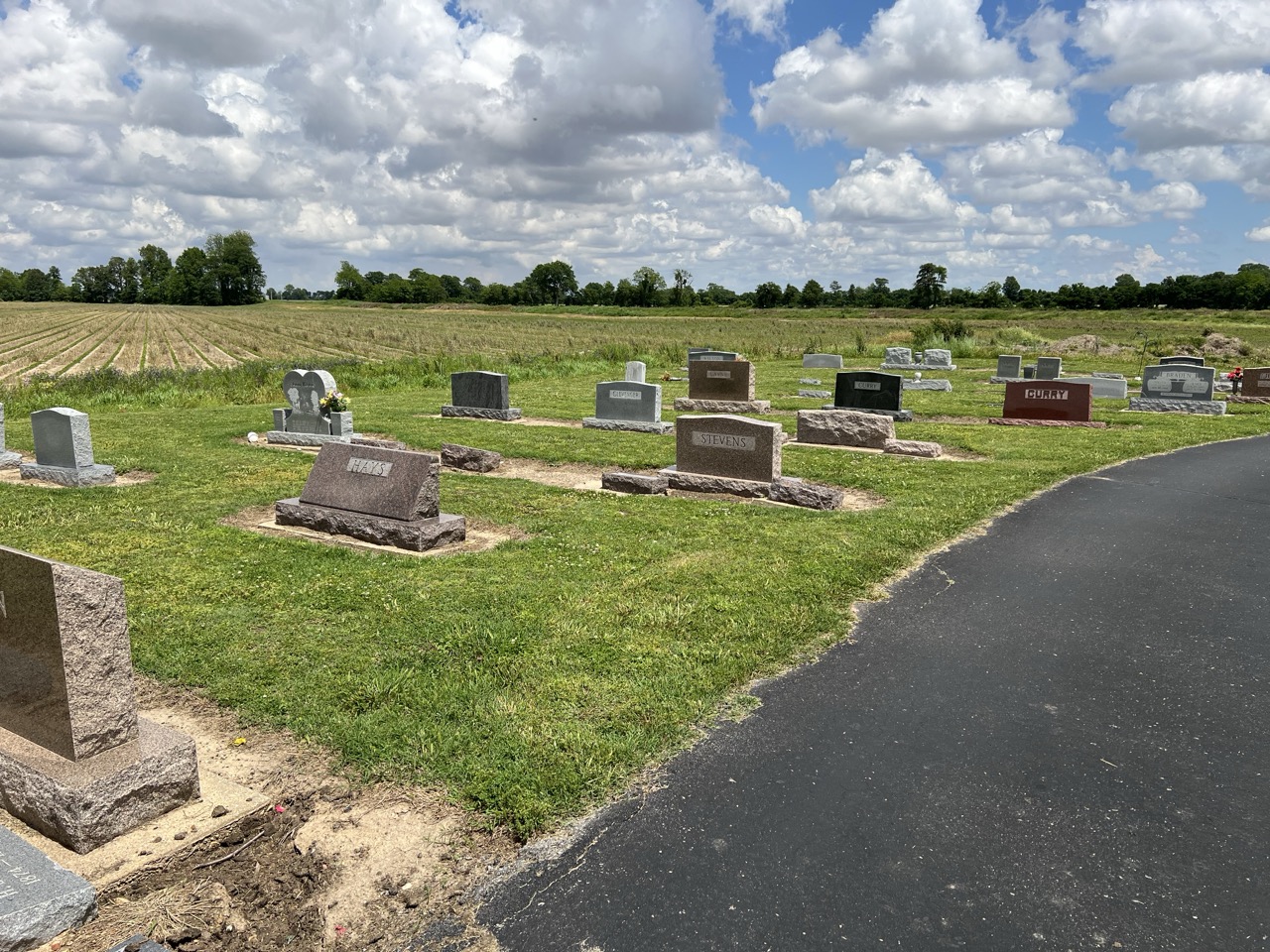
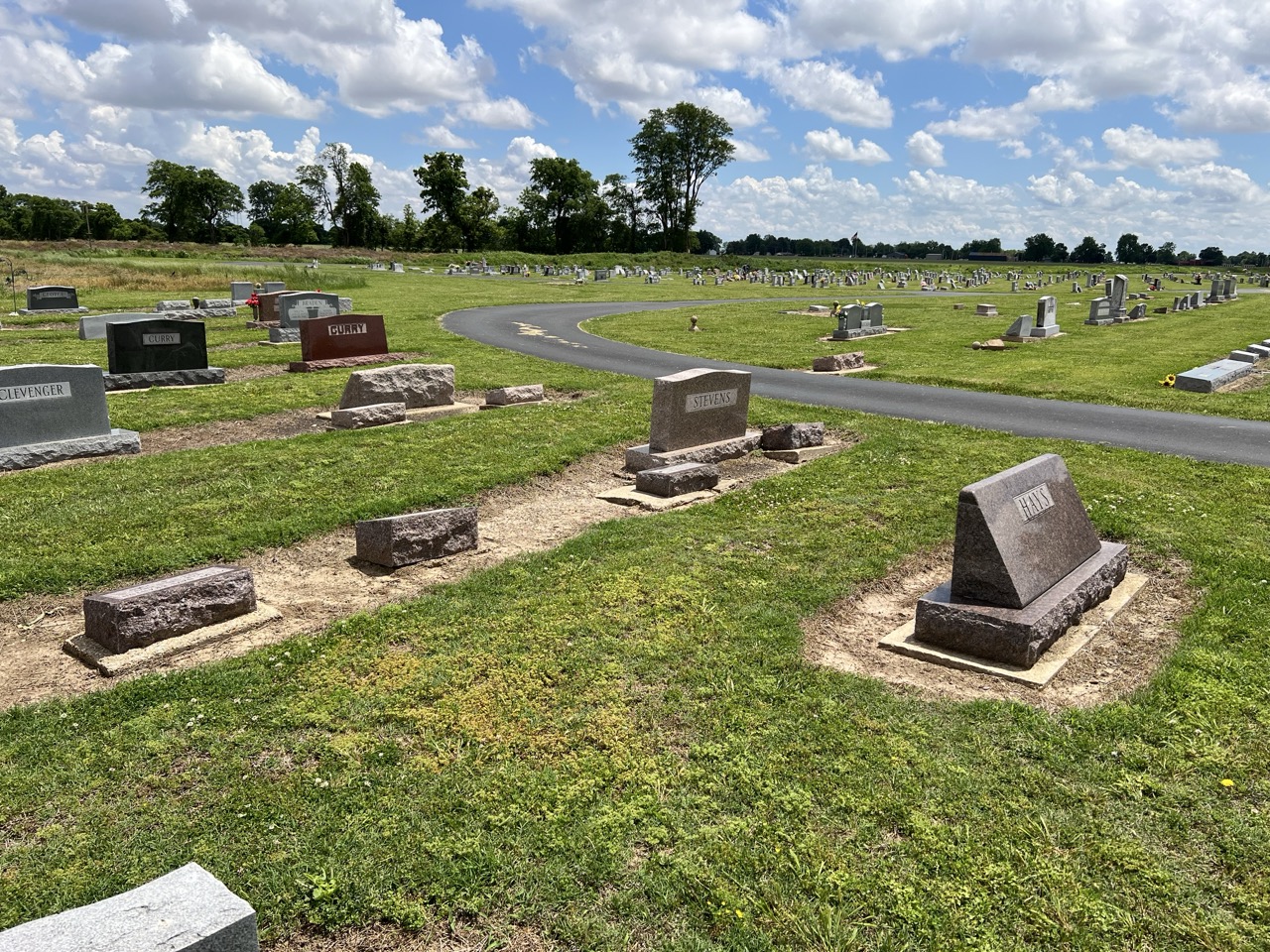
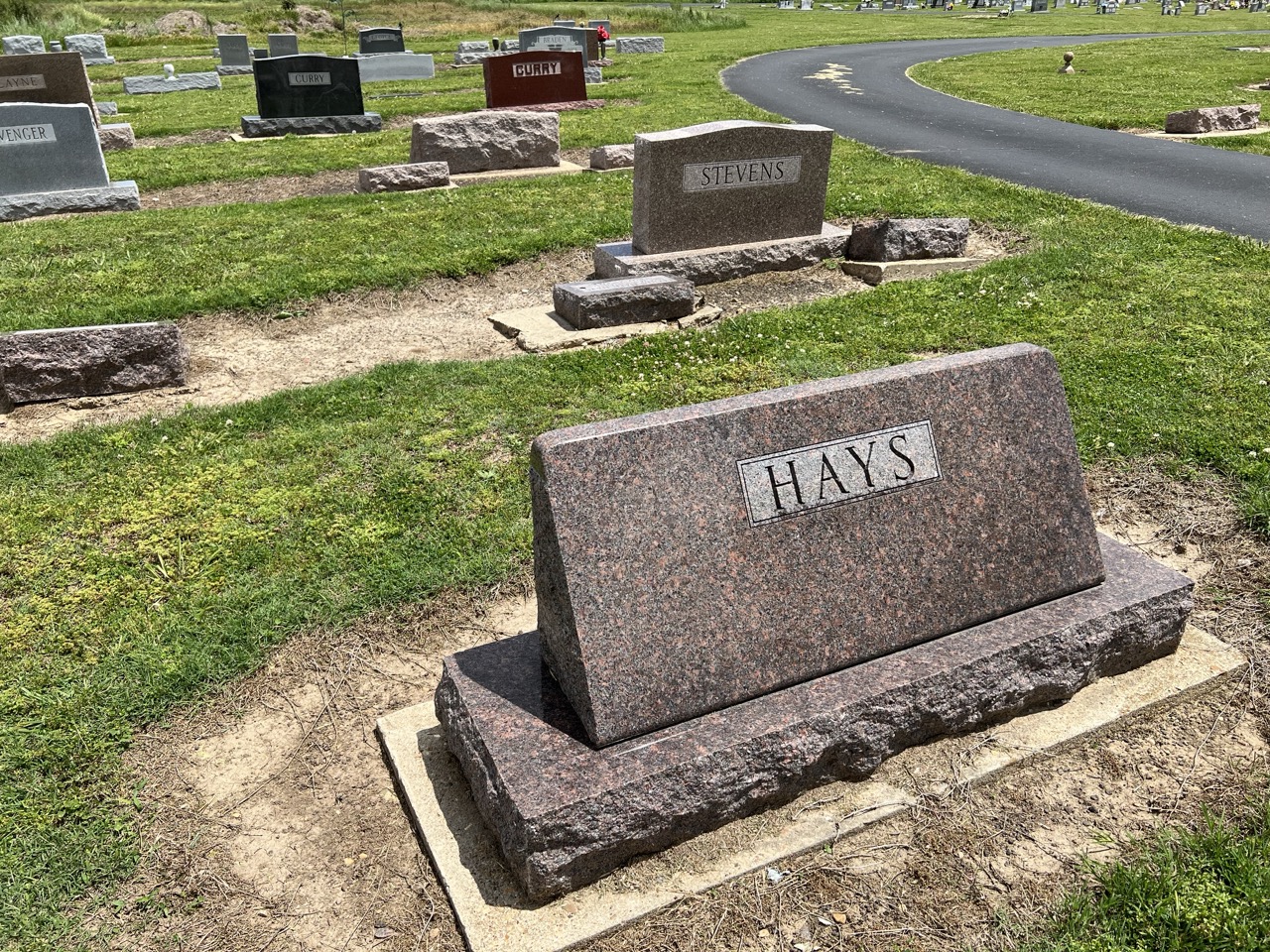
The Hays family plot is located in the Senath Cemetery in Dunklin County, in the Southeast corner of Missouri. From Memphis head west on I-40 and cross the Mississippi River into West Memphis, Arkansas. Take I-55 north 44 miles and take Exit 44 onto AR-181 north. In about 15 miles you should turn left on US Hwy. 78. In about six mile you'll turn north on AR-77. Then continue on AR-119 enter into Missouri. Continue onto State Hwy K. At Senath turn right on US412. Turn left on E. Commercial St. In less than a half-mile you will turn right on N. Main St. In .3 miles turn right on Cemertery Rd. Enter cemetery and bear to the left and head toward the rear of the cemetery where the Hays plot will be on your left. It may be easier to use the GPS belows as it is taken from the Hays family plot.
GPS Location
36°08'33.2"N 90°09'13.7"W
or D.d. 36.142547, -90.153800
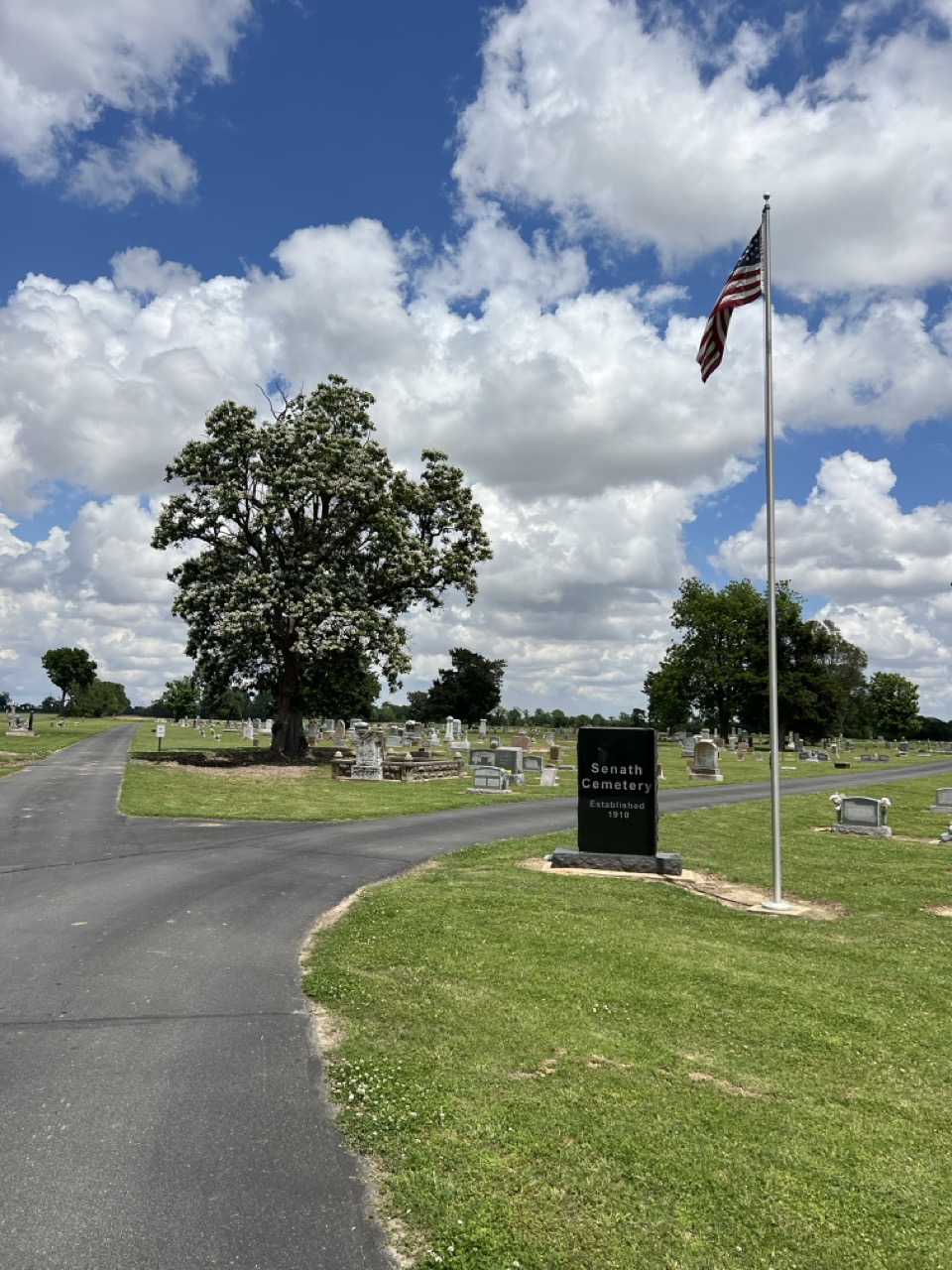
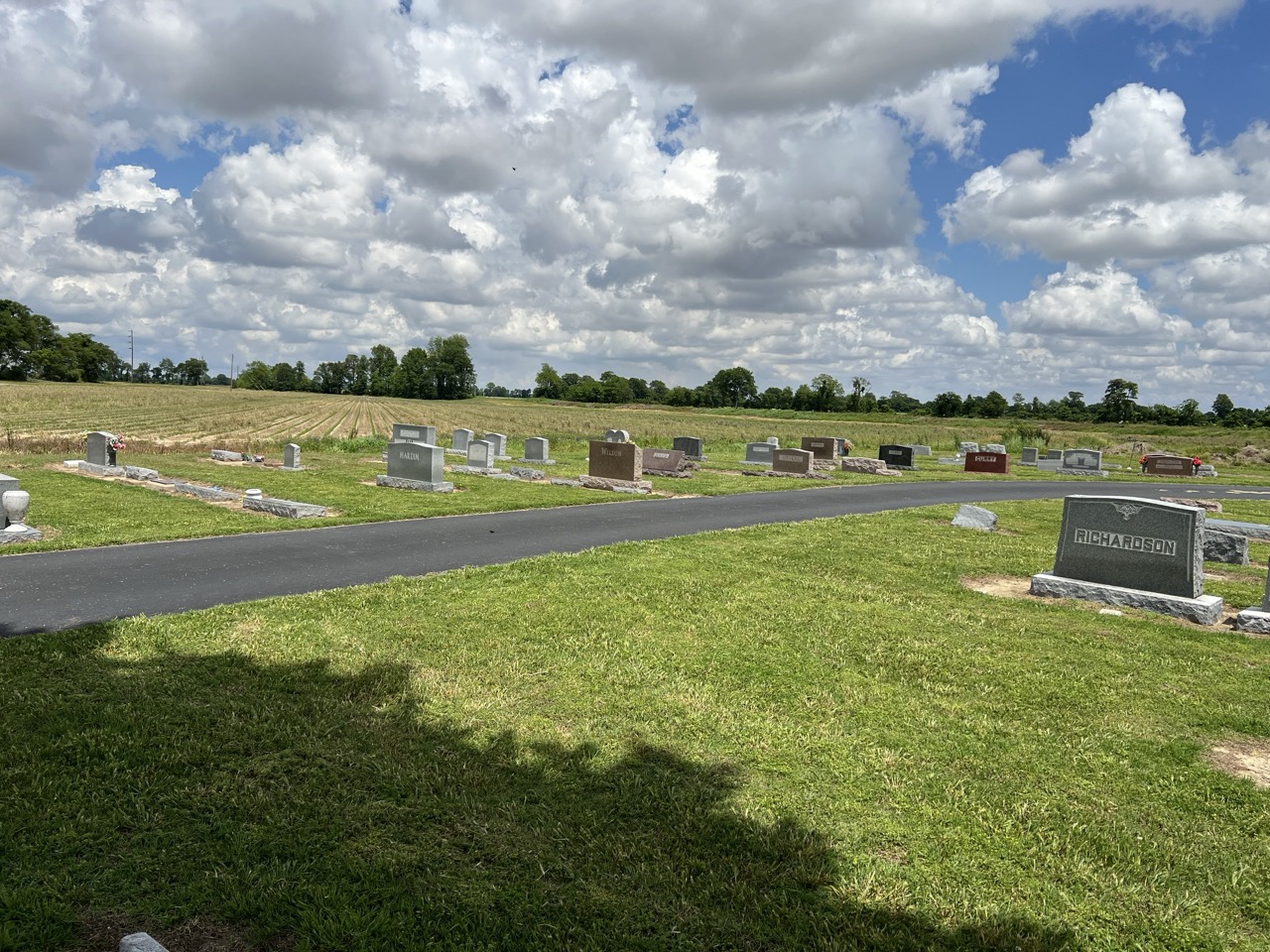
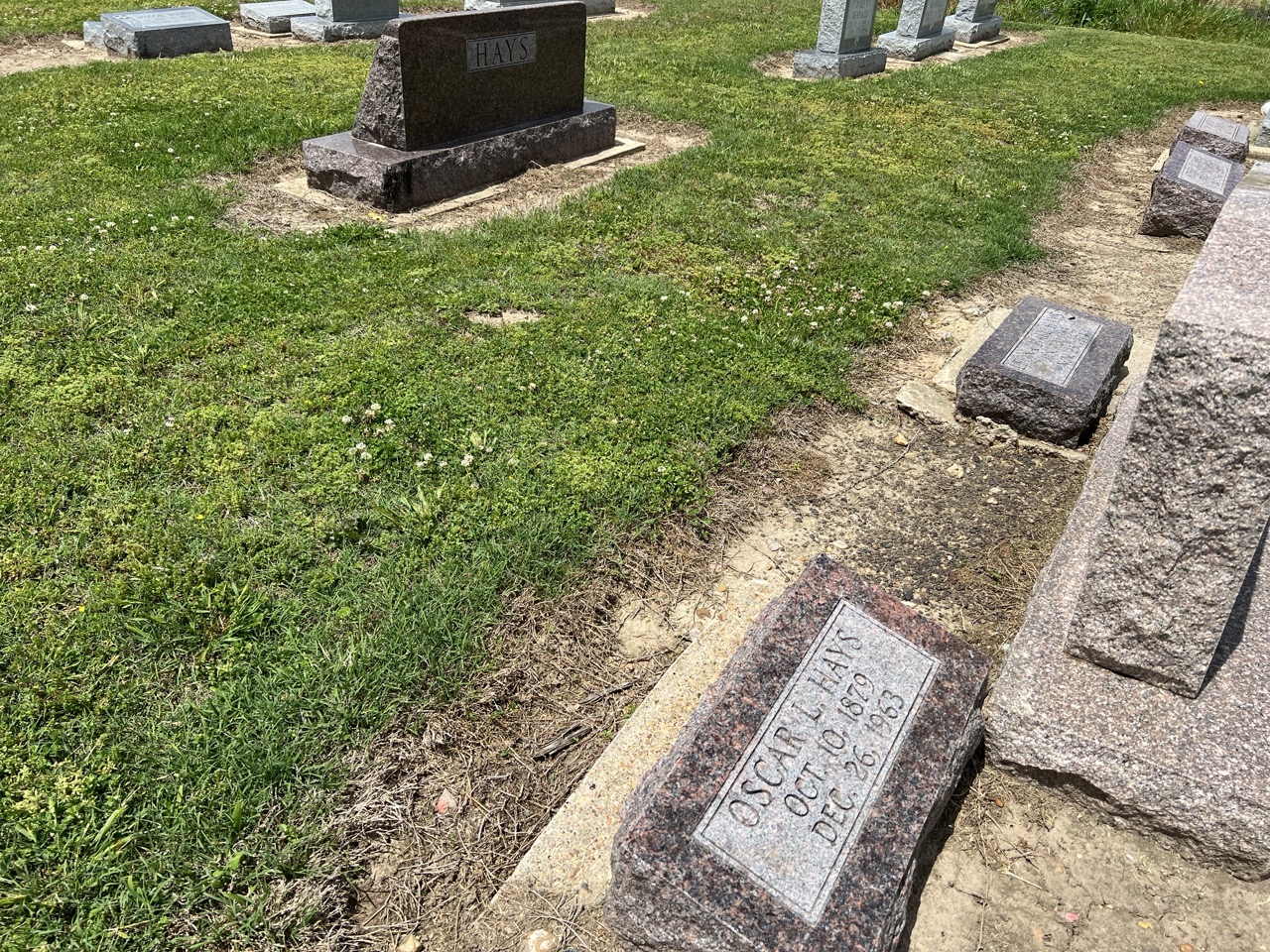
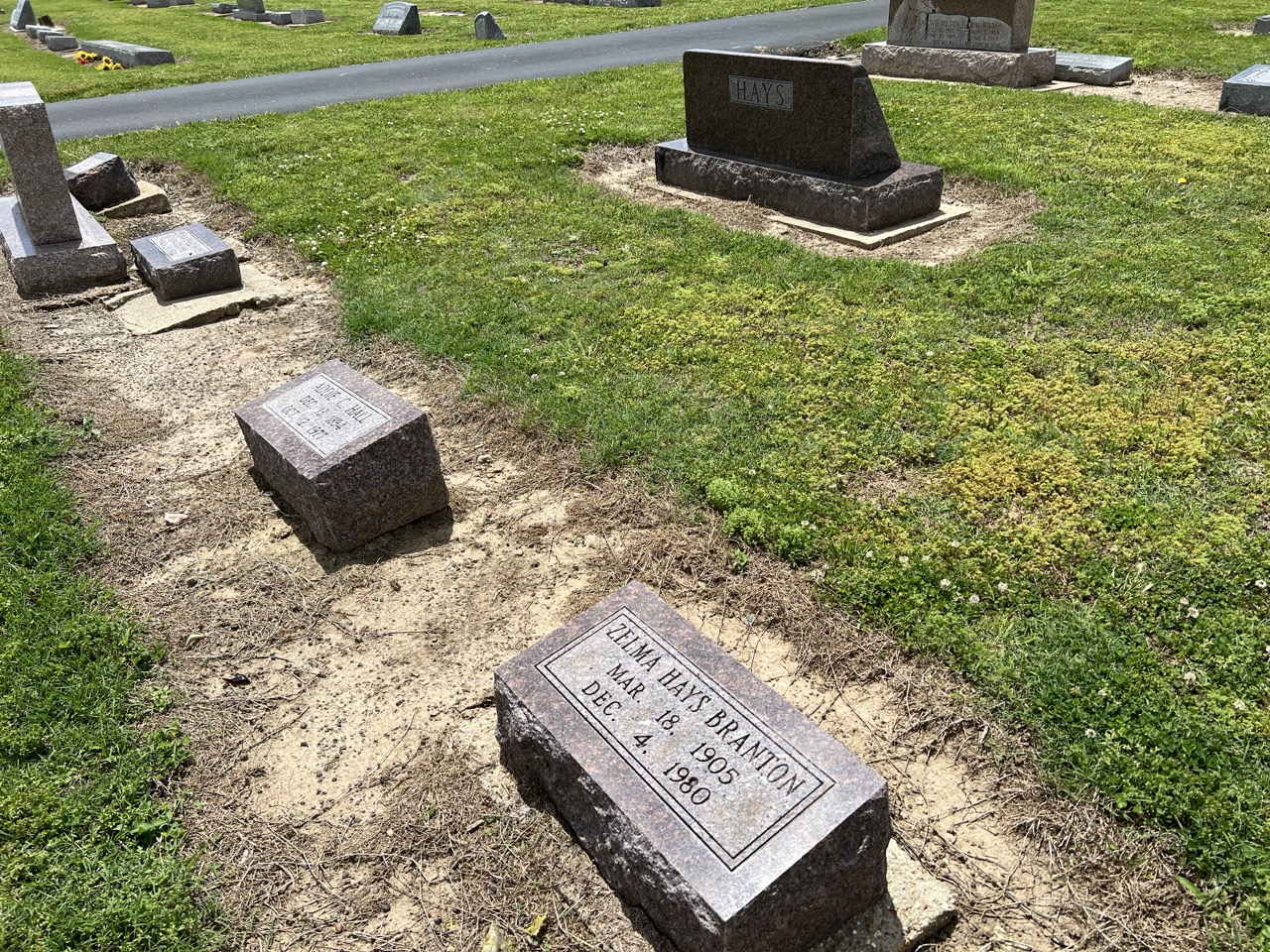
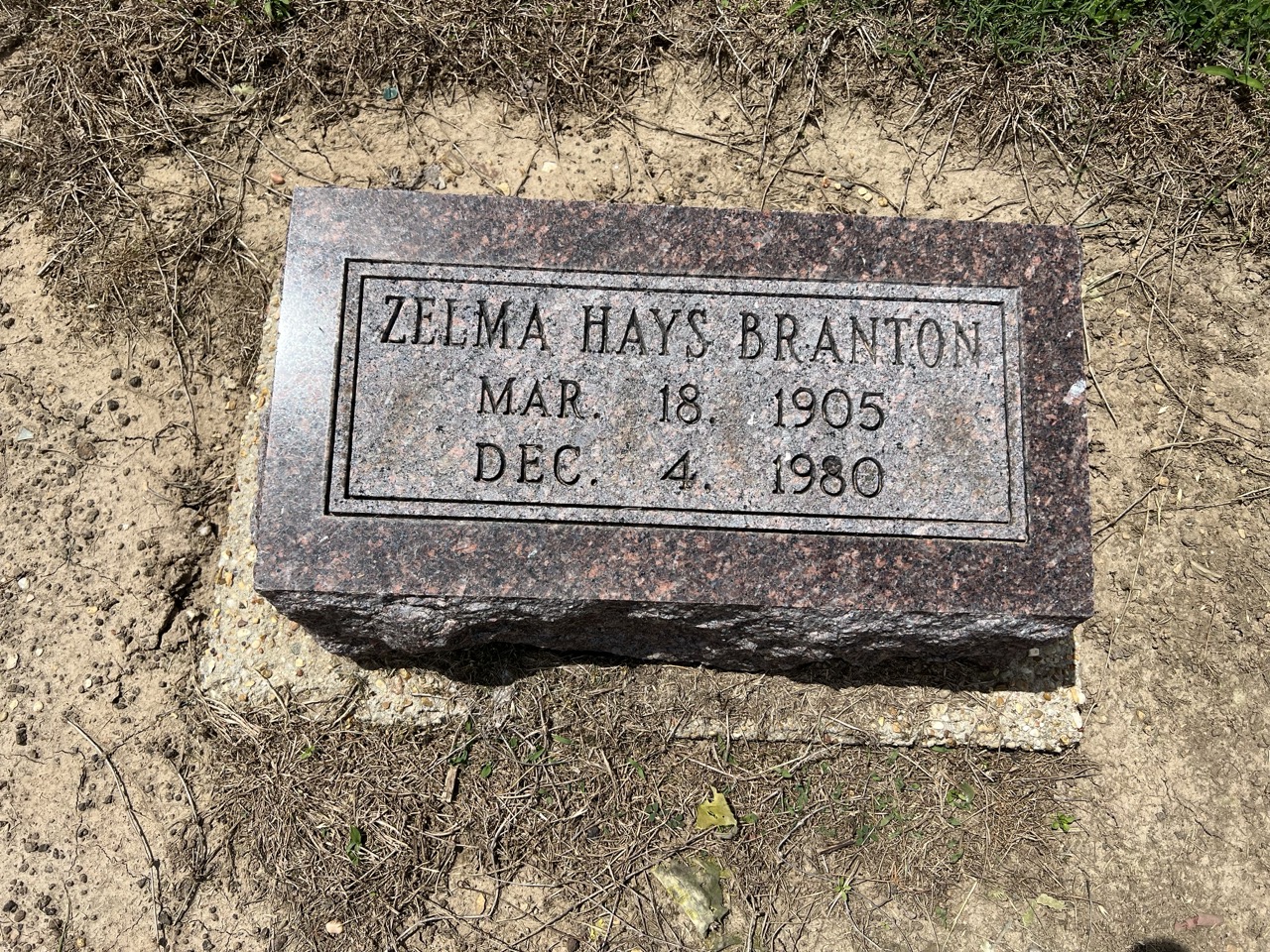
Zelma Hays Branton
March 18, 1905
December 4, 1980
Daughter Of O. L. and Leona Hays
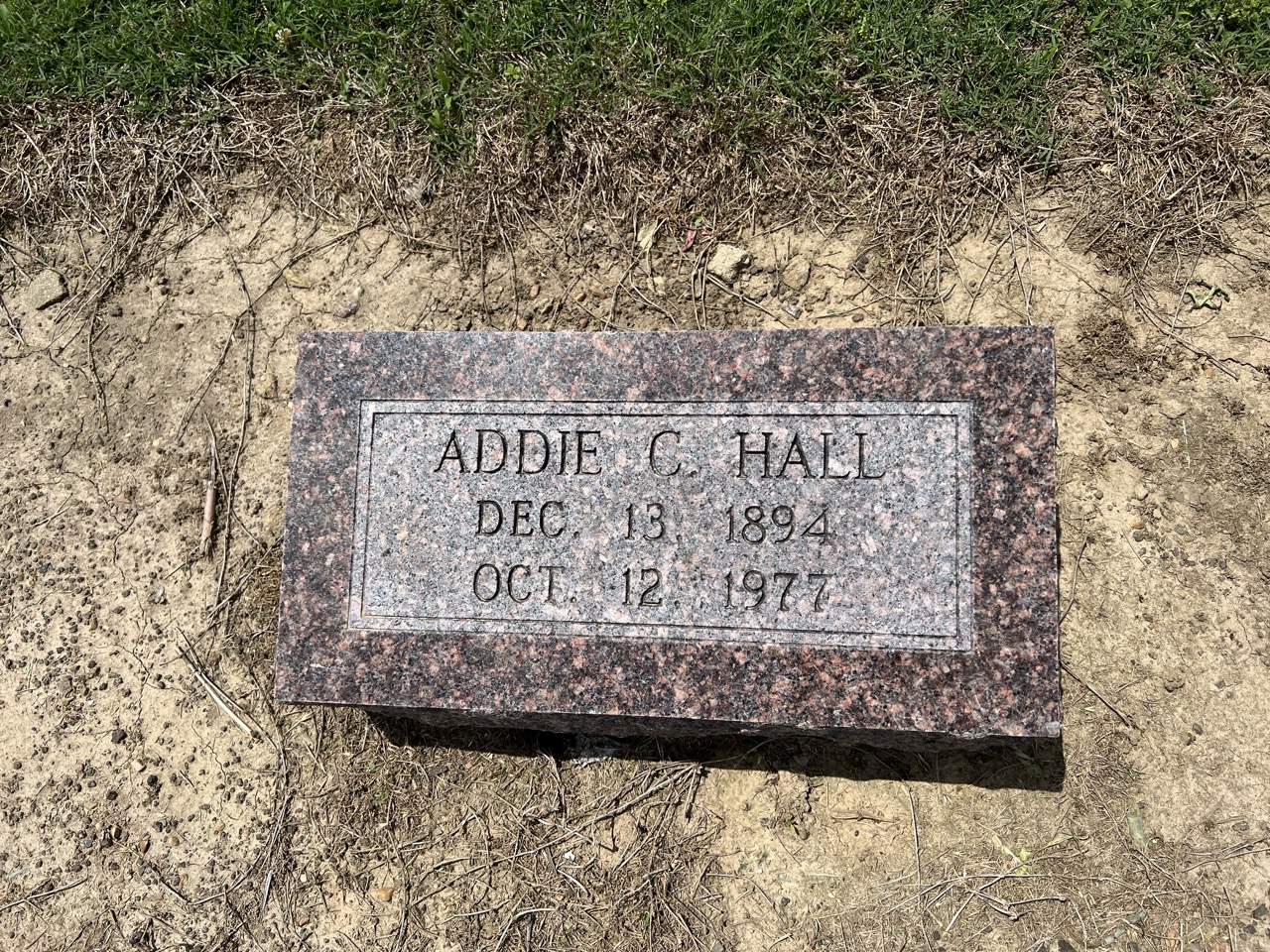
Addie C. Hall
December 13, 1894
October 12, 1977
Younger Sister Of Leona who lived with the family most of her days
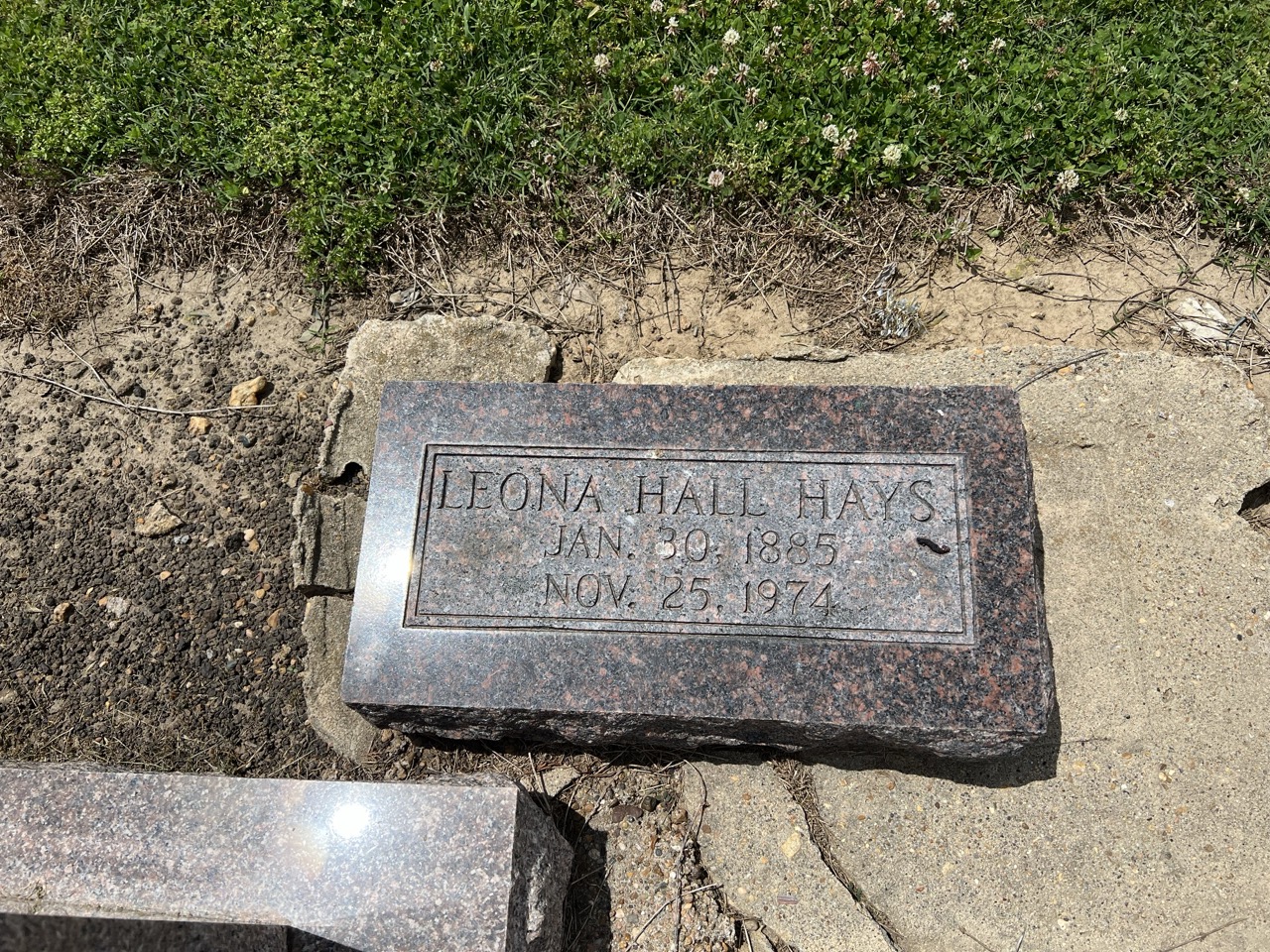
Leona Hall Hays
January 30, 1885
November 25, 1974
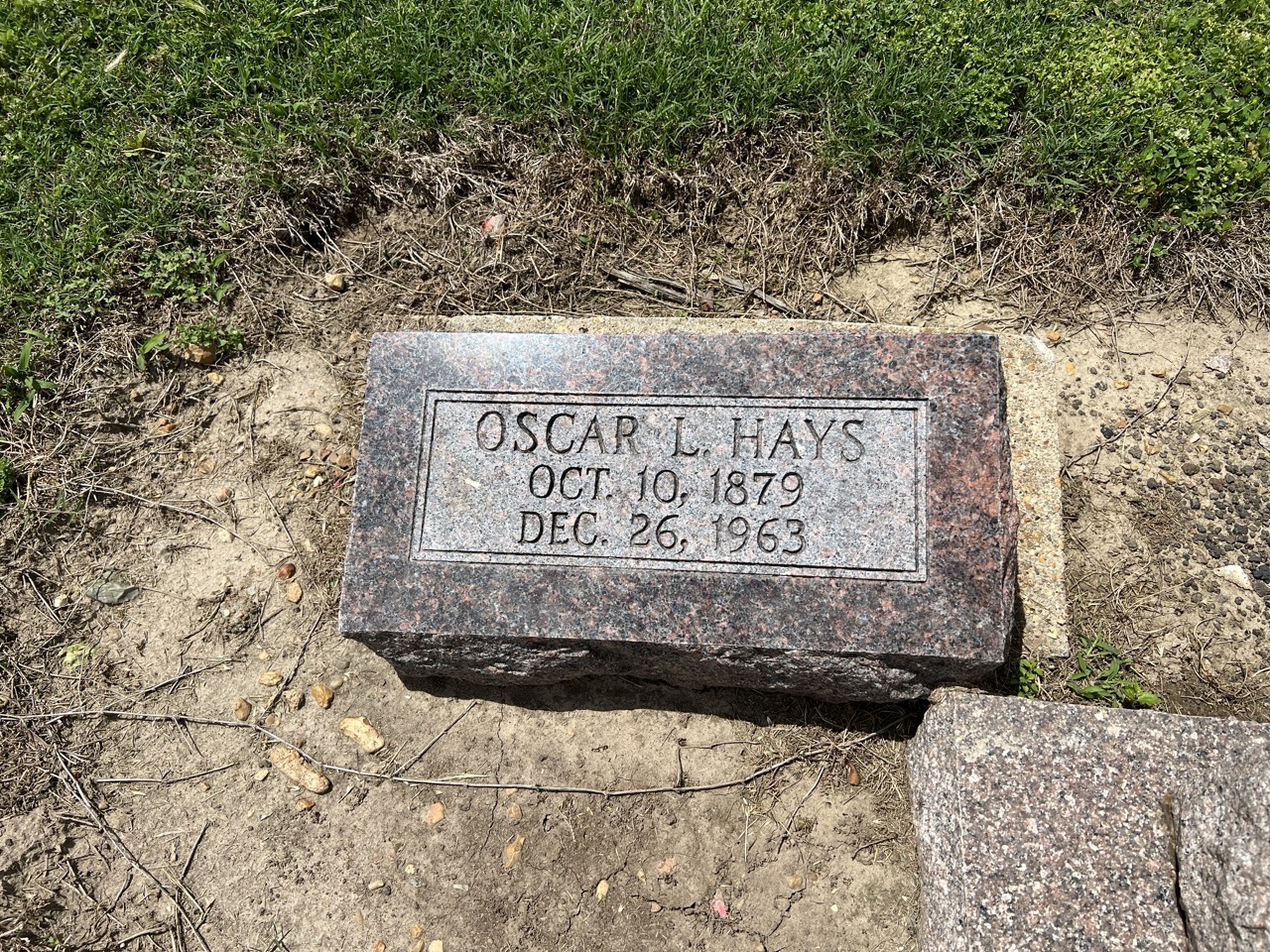
Oscar L. Hays
October 10, 1879
December 26, 1963
Photos Taken May 8, 2025
Webpage Produced June 22, 2026
Courtesy Of Scott Harp
www.TheRestorationMovement.com
Special Recognition: It was my honor to visit the grave of Oscar L. Hayes at the end of a week of visiting the great state of Missouri where I was engaged in a gospel meeting for the South Hwy. 5 church of Christ in Lebanon, Missouri. That week I was able to visit 25 or 30 graves of gospel preacher of yesteryear. The Hays family plot was the next to last to visit on my trip home after the meeting.